
Teeth Whitening in Singapore: Costs, Options & What to Expect
Introduction
One of the most common cosmetic dental questions we receive is:
“How can I whiten my teeth safely and effectively?”
Teeth whitening remains one of the most popular aesthetic dental treatments in Singapore due to its relatively simple, non-invasive nature and noticeable improvement in smile appearance.
This guide explains:
how teeth whitening works,
the different whitening options available in Singapore,
common causes of tooth discolouration,
expected costs,
and common myths surrounding teeth whitening.
If you are preparing for a wedding, photoshoot or important event, we will also discuss recommended whitening timelines and preparation.
What Is Teeth Whitening?
Teeth whitening is a cosmetic dental treatment that lightens the colour of teeth and reduces stains or discolouration.
Teeth can darken over time due to reasons such as:
coffee and tea consumption,
smoking,
ageing,
certain medications,
and natural darkening of teeth over time
Depending on the cause of the staining, whitening may be performed through:
professional in-office whitening,
customised take-home whitening trays,
or over-the-counter whitening products.
Professional teeth whitening treatments produce more predictable and effective results compared to over-the-counter products because they use stronger whitening agents under controlled supervision.
How Does Teeth Whitening Work?
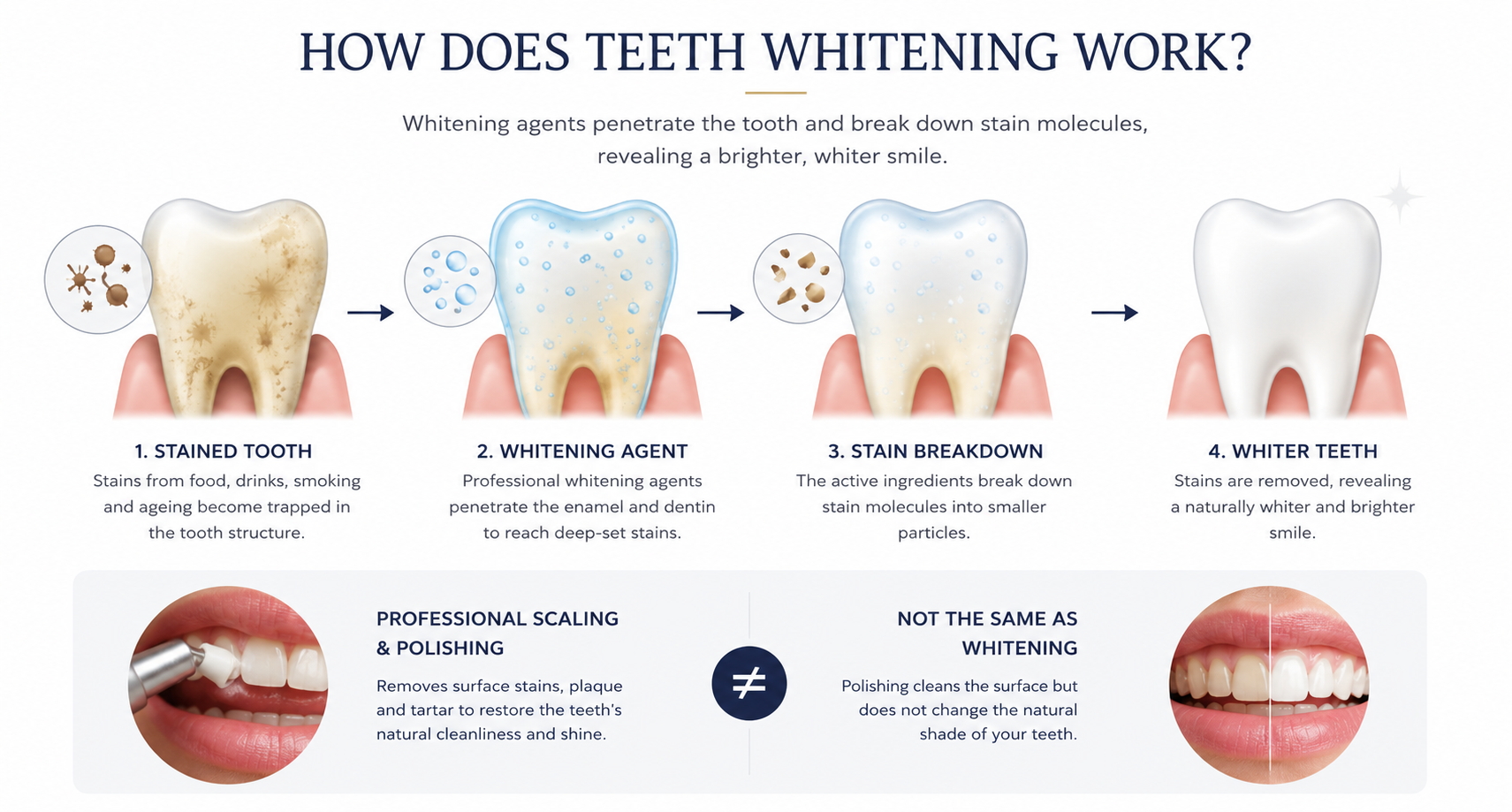
Teeth whitening works through chemical oxidation that breaks down stain molecules within the tooth structure.
If staining is mainly external, professional scaling and polishing may help remove surface stains caused by coffee, tea or smoking. However, polishing alone does not actually whiten the teeth beyond their natural shade.
What Makes Whitening Products Work?
Most teeth whitening products work using hydrogen peroxide, either directly or through compounds such as carbamide peroxide.
Hydrogen peroxide works by breaking down chromogens - the organic compounds within the tooth that are responsible for staining and discolouration. Through an oxidation reaction, these darker stain molecules are broken into smaller, lighter-coloured compounds, resulting in a whiter appearance.
Usually, only the front 8 to 10 teeth are whitened, as these are the teeth most visible when smiling and speaking.
Who Is Suitable for Teeth Whitening?
Suitability for teeth whitening depends largely on the type of staining present.
There are two main categories of tooth stains:
external stains,
and internal stains.
In general, teeth affected mainly by external staining tend to respond very well to whitening treatment. Internal stains, however, are often more difficult to treat and may respond less predictably depending on the underlying cause and severity of the staining.
External Stains
External stains are usually caused by lifestyle and dietary habits.
Common causes include:
coffee and tea,
smoking,
plaque build-up,
dark-coloured foods and beverages
Teeth affected mainly by external staining generally respond well to professional whitening treatment.
However, it is still important to undergo a dental assessment before whitening begins. Existing tooth decay, gum disease or tooth sensitivity should ideally be treated first to ensure a safer and more comfortable whitening experience.
Internal Stains
Internal stains develop from changes within the tooth itself and are often more difficult to improve with whitening alone.
Causes of internal staining include:
childhood antibiotics such as tetracycline,
excessive fluoride exposure during tooth development,
ageing,
dental trauma,
genetic conditions
In Singapore, fluorosis is relatively common due to fluoride exposure during childhood. While fluoride helps prevent tooth decay, excessive ingestion during tooth development can occasionally cause patchy white or brown staining.
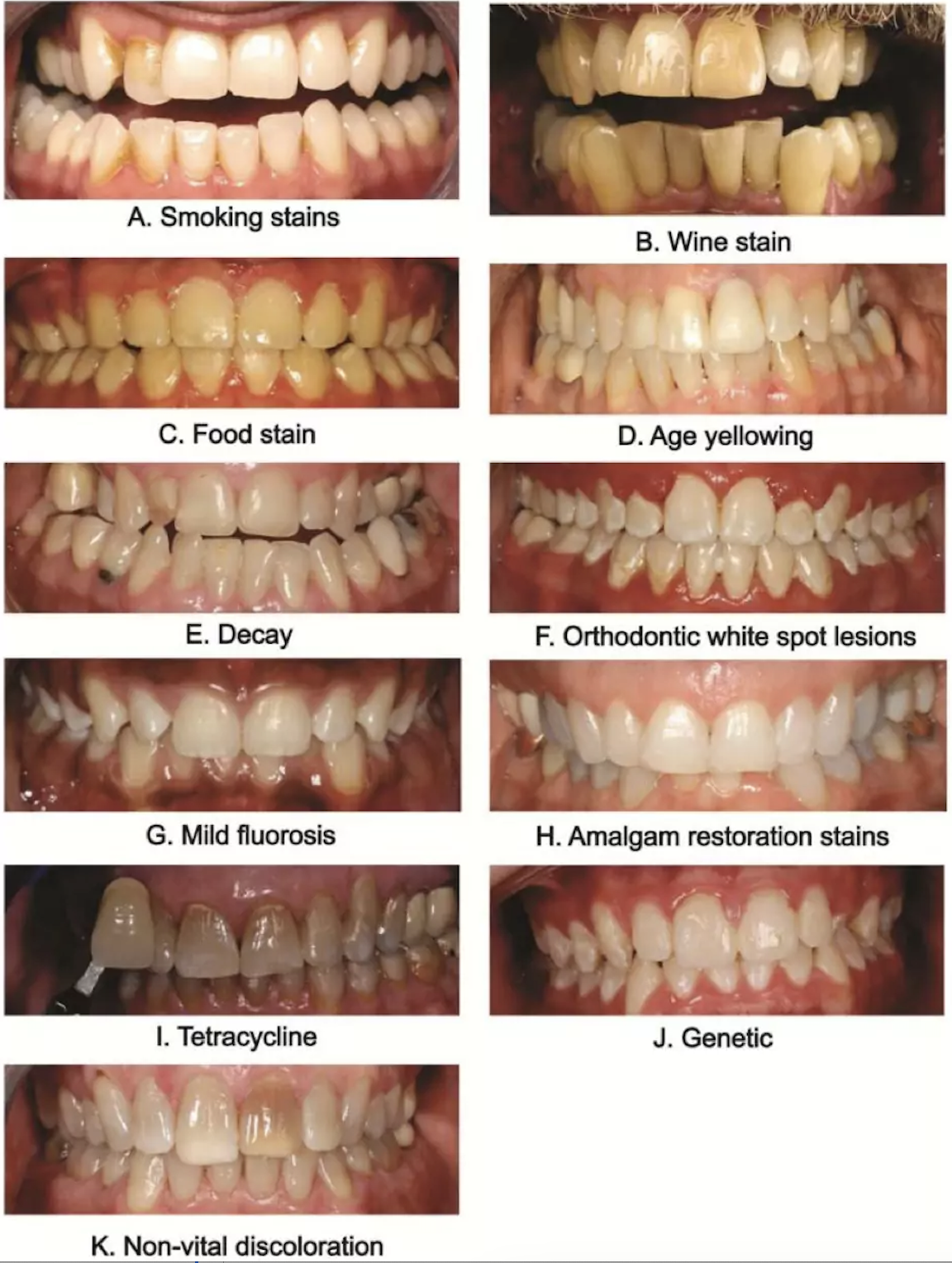
Examples of Internal and External Staining
What Types of Teeth Whitening Are Available in Singapore?
Common whitening options available in Singapore include:
whitening toothpastes,
over-the-counter whitening strips and gels,
whitening mouthwash,
take-home whitening kits,
and professional in-office whitening.
This article focuses mainly on peroxide-based whitening systems, namely:
Take-home whitening kits,
Professional in-office whitening.
What Is a Take-Home Whitening Kit?
A take-home whitening kit usually consists of:
customised whitening trays,
and peroxide-based whitening gel.
The gel is placed into the trays and worn for varying durations, from 30 minutes per session to overnight use, depending on the whitening concentration prescribed.
Take-home whitening kits in Singapore generally cost from approximately $380 onwards.
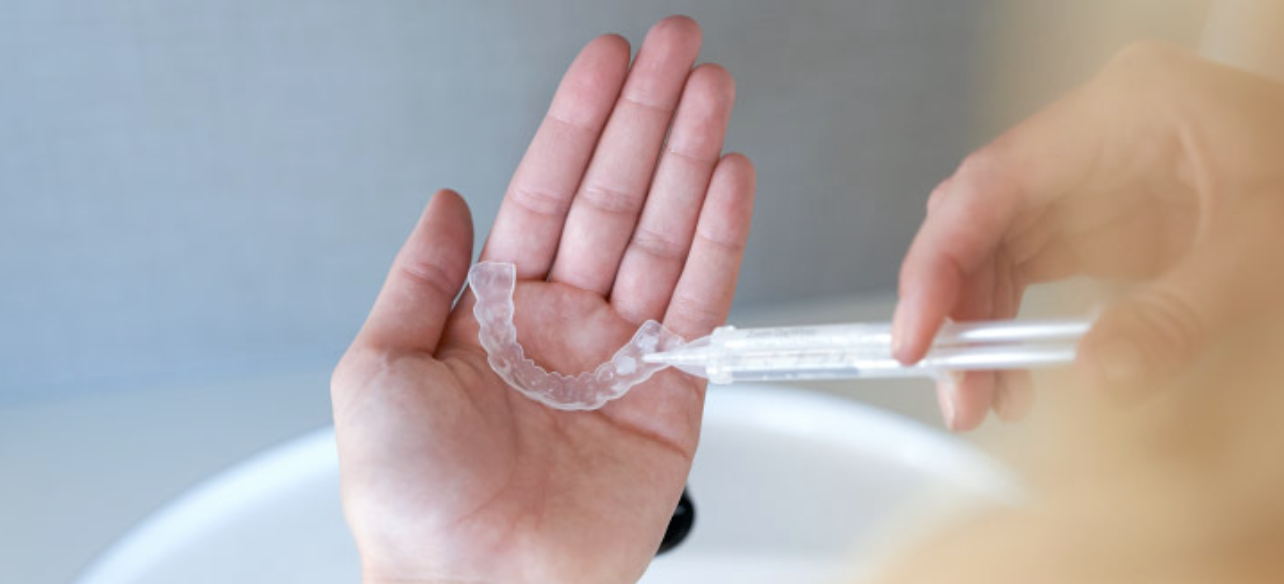
Home Whitening Trays
What Is In-Office Teeth Whitening?
Professional in-office whitening uses higher concentrations of whitening gel that should only be applied under professional supervision.
The procedure usually takes about two hours and may temporarily cause some tooth sensitivity due to the stronger whitening agents used. However, patients can often achieve teeth that are several shades lighter after a single session, depending on their initial tooth shade and staining condition.
Well-known systems include:
Philips ZOOM,
and Opalescence Boost.
Professional in-office teeth whitening in Singapore typically costs between $950 and $1500.
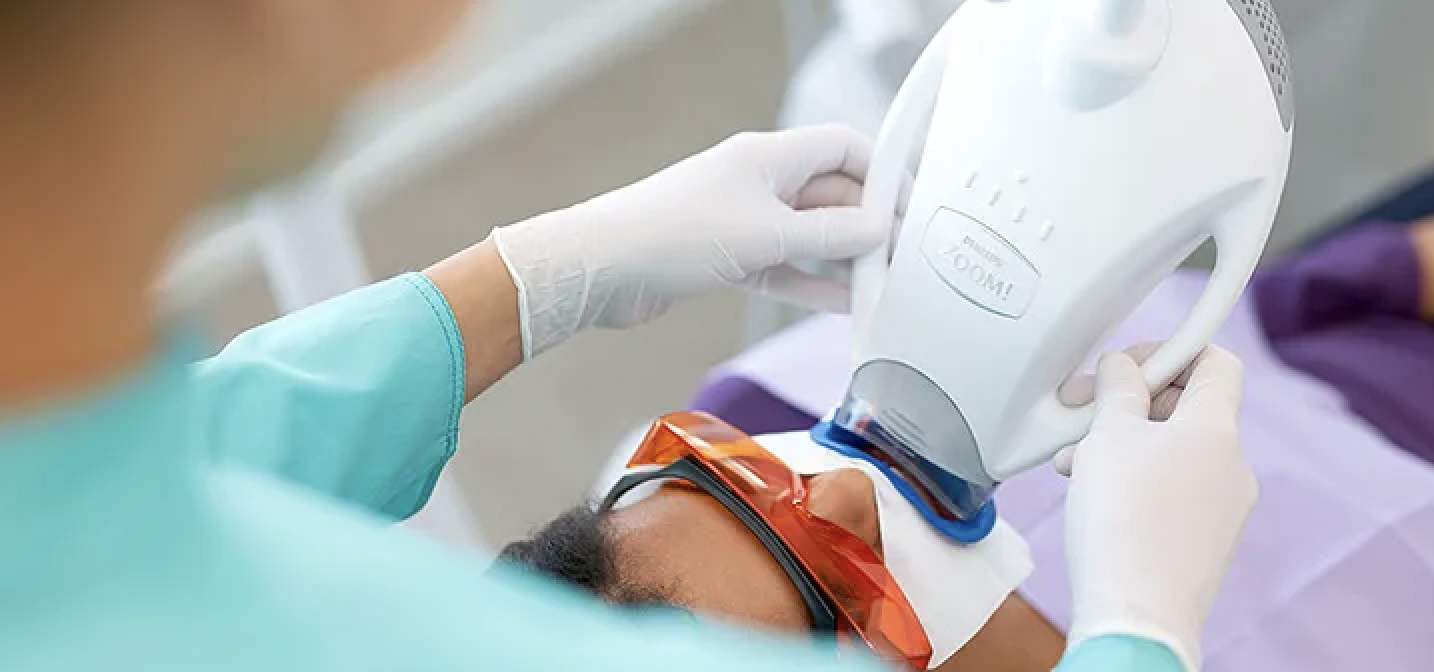
ZOOM In-Clinic Whitening
Common Questions About Teeth Whitening
Does Teeth Whitening Weaken Teeth?
Current evidence suggests that professionally supervised peroxide-based whitening does not cause long-term damage to teeth when used appropriately.
Does Teeth Whitening Cause Sensitivity?
It is common to feel some sensitivity during and after the whitening process. However, it is important to note that this sensitivity is temporary and resolves within 1 or 2 days.
Is Peroxide Harmful?
Hydrogen peroxide used in dental whitening products is generally considered safe when used under professional guidance and in controlled amounts.
How Long Does Teeth Whitening Last?
Teeth whitening results vary depending on factors such as diet, smoking habits and oral hygiene. In general, whitening results may last from several months to a 1 to 2 years. Frequent consumption of coffee, tea, red wine or tobacco products may cause staining to return more quickly. Periodic maintenance whitening may help prolong results.Does Teeth Whitening Work on Crowns or Fillings?
Teeth whitening does not significantly change the colour of crowns, veneers or tooth-coloured fillings. Whitening mainly affects natural tooth structure. If existing restorations no longer match the surrounding teeth after whitening, replacement of the restorations may sometimes be considered for colour matching.
Is There Any Downtime After Teeth Whitening?
Most patients are able to resume normal daily activities immediately after whitening treatment.
Some temporary tooth sensitivity may occur for a short period after treatment. Patients are usually advised to avoid strongly coloured foods and drinks such as coffee, tea, curry or red wine for the first 24–48 hours after whitening.
Tips for Maintaining Whiten Teeth
To maintain whitening results:
practise good oral hygiene,
consider using an electric toothbrush,
reduce coffee, tea and smoking where possible,
and avoid heavily coloured foods immediately after whitening treatment.
For longer-lasting results, many of our patients combine:
professional in-office whitening,
with periodic maintenance using take-home whitening trays.
Teeth Whitening Timeline Before Important Events
If you have an important event such as a wedding or photoshoot, it is advisable to plan whitening treatment approximately 2 to 3 months in advance.
This allows sufficient time for:
dental cleaning,
replacement of defective fillings if necessary,
fabrication of whitening trays,
and stabilisation of the final tooth shade.
While in-office whitening results are immediate, final colour stabilization may still take up to 2 weeks. Temporary tooth sensitivity may also last up to 48 hours after treatment.
Considering Teeth Whitening?
If you are considering professional teeth whitening in Singapore, a dental assessment can help determine:
the type of staining present,
whether whitening is suitable for your teeth,
and which whitening method is likely to provide the best results safely.
At Tanglin Dental, we provide both take-home whitening systems and in-office whitening treatments tailored to different levels of staining and sensitivity.
Please note that this article is intended for general educational purposes and is based on clinical experience and current scientific evidence.
Sources:
Carey CM. Tooth Whitening: What We Now Know. Journal of Evidence-Based Dental Practice. 2014;14 Suppl:70–76.
https://www.philips.com.sg/c-e/pe/teeth-whitening/zoom-in-office
https://www.philips.com.sg/c-e/pe/teeth-whitening/zoom-at-home
