Can Braces Change the Shape of Your Face?
Short answer: Yes — braces can change certain features of your face, but they won't completely reshape it. The amount of change depends on your age, your specific bite problem, and the type of treatment involved.
Understanding both what's possible and what isn't will help you set realistic expectations before you start treatment.
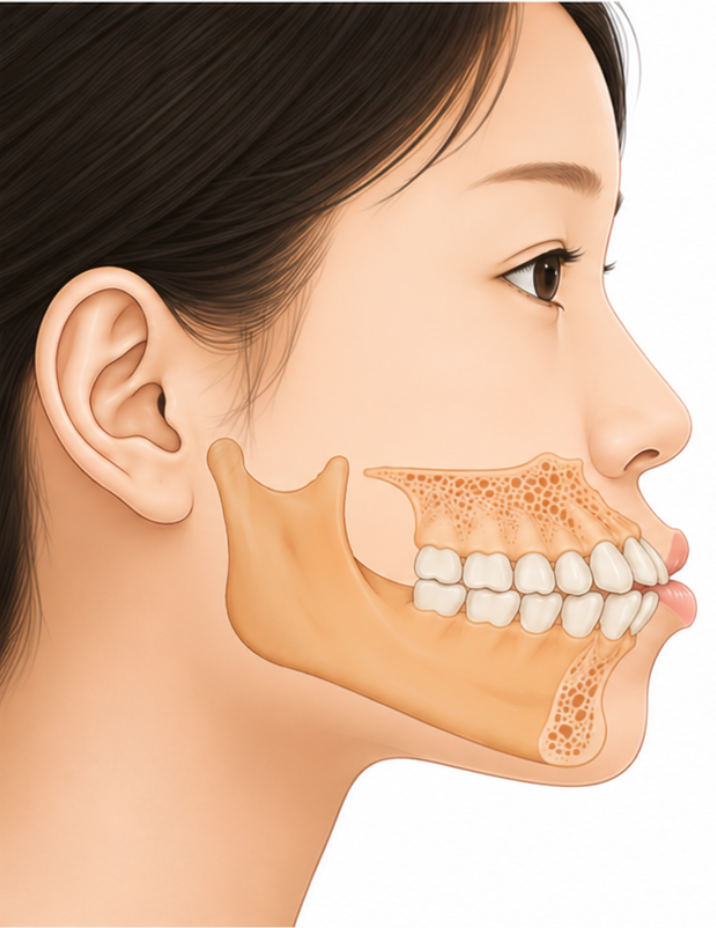
How can braces change your face?
Braces may affect:
Lip position
Facial profile
Smile width
Chin appearance (in growing children)
Jaw alignment (when combined with growth appliances or surgery)
Braces generally do not:
Make your nose smaller
Make your cheekbones higher
Permanently slim your face
Change your forehead or upper face
The part of your face that changes most: Your lips
Your teeth provide the structural support for your lips. When the position of your teeth changes, your lips often move with them. This is why orthodontic treatment can have a meaningful impact on your facial profile, particularly the lower third of your face.
That said, not every orthodontic case produces dramatic facial changes and that's completely normal. If you have mild crowding but your front teeth are already in a good position, straightening them is unlikely to noticeably change your profile. The amount of tooth movement simply isn't great enough to produce major changes in the overlying soft tissues (lips and cheeks).
For most patients, this is actually desirable - It means your facial balance is being preserved, not disrupted.
When profile changes are more noticeable: Extraction cases
Profile changes become more significant when treatment involves removing teeth to create space, particularly for patients with severely protruding front teeth.
By retracting those teeth into the newly created space, the lips can follow. Over the course of treatment, this can produce a softer, more balanced facial profile, particularly in patients whose lips appear prominent or who struggle to close their lips comfortably at rest.
Growth modification: Where the most significant changes happen
This is where the greatest facial changes occur, because treatment is influencing the development of the jaw bones themselves rather than simply moving teeth.
Two common examples:
Facemask (Reverse-Pull Headgear)
A facemask is used in children with an underdeveloped upper jaw, where the lower jaw appears to sit in front of the upper jaw.By applying gentle forward traction during growth, the appliance encourages the upper jaw to develop further forward. This improves both the bite and the facial profile.
Twin Block Appliance
A twin block is used for children whose lower jaw is underdeveloped, resulting in a receding chin and protruding upper teeth.By positioning the lower jaw forward during growth, the appliance encourages it to develop into a more favourable position. Improvements in chin projection and overall facial balance can be significant.
The key in both situations is timing. These appliances rely on a child's natural growth, which means there is only a limited window during which they are effective.
When braces alone aren't enough: The role of jaw surgery
For adults with significant jaw discrepancies, braces alone have a ceiling. Orthodontics works by moving teeth within the bone. What it cannot do is reposition the jaw bones themselves.
In severe cases, attempting to correct the bite without jaw surgery has real limits. In these situations, the most appropriate and stable solution is a combination of orthodontics and orthognathic (jaw) surgery, performed in collaboration with an oral and maxillofacial surgeon. The braces align the teeth precisely within each jaw, and the surgery repositions the jaws themselves into the correct relationship with each other. The outcome, both functionally and aesthetically, is typically far superior to what braces alone could achieve.
This is never a decision taken lightly, but for the right patient, jaw surgery is genuinely life-changing.
Every smile is different
The factors discussed in this post — your age, jaw relationship, bite severity, and treatment goals — all interact differently in every individual patient.
This is why every orthodontic treatment begins with a thorough assessment, including clinical photographs, dental records, and, when necessary, jaw X-rays. These allow your orthodontist to understand your bite, facial structure, and treatment goals before recommending the most appropriate approach.
Every face is different, so the changes you can expect are best discussed during the consultation.
Please note that this article is intended for general educational purposes and is based on clinical experience and current scientific evidence.