Bleeding Gums: Should You Be Concerned?
Introduction
One of the most common questions patients ask during a dental check-up is:
“Why do my gums bleed when I floss?”
Bleeding gums can feel worrying, especially if it happens regularly. The good news is that in many cases, bleeding gums are caused by inflammation around the teeth and can improve significantly with the right care.
This article explains why gums may bleed easily, when it could be a sign of gum disease, what you can do at home, and when you should consider seeing a dentist.
Why Are My Gums Bleeding?
Healthy gums generally should not bleed during brushing or flossing. If your gums bleed regularly, it is usually a sign that the gums are inflamed.
The most common cause of bleeding gums is plaque buildup around the gumline and between the teeth. Plaque contains bacteria that can irritate the gums, causing them to become red, swollen, and more likely to bleed. This early stage of gum inflammation is known as gingivitis.
Bleeding may sometimes occur when you first start flossing regularly after not cleaning between the teeth for some time. This is usually due to plaque buildup causing gum inflammation. According to the American Dental Association, mild bleeding when starting a flossing routine is relatively common and often improves with consistent, gentle daily cleaning.
However, bleeding that persists for more than 1 or 2 weeks should not be ignored.
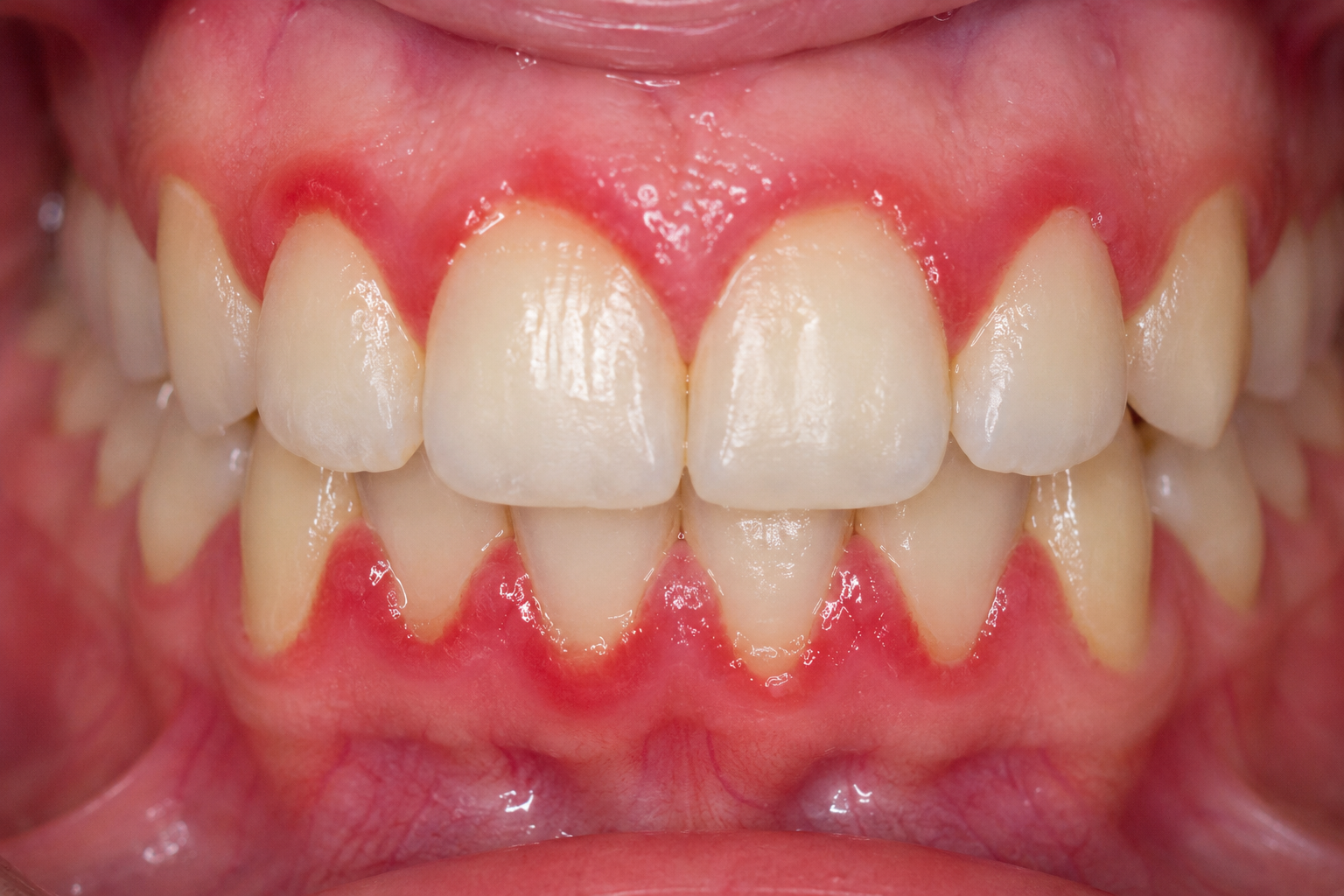
Gingivitis (gum inflammation)
Common Causes Of Bleeding Gums
Plaque buildup between the teeth
Toothbrushing alone cannot fully clean the tight spaces between teeth. If these areas are not cleaned regularly with floss, plaque can accumulate and irritate the gums.Tartar buildup
Over time, plaque can harden into tartar, which cannot be removed by brushing or flossing alone. Tartar traps bacteria which leads to gum inflammation and bleeding. Routine scaling at the dental clinic is required to remove it.Flossing technique
Pushing the floss forcefully into the gums can cause trauma. Floss should be gently guided between the teeth and curved around each tooth.Inconsistent flossing
Flossing only occasionally may cause the gums to bleed repeatedly because the inflammation does not have time to heal. Daily flossing is more effective at helping the gums become healthier over time.Lifestyle and medical factors
Pregnancy, smoking, certain medications such as blood thinners, and some medical conditions such as diabetes may also make gums more prone to bleeding.
Should I Stop Flossing If My Gums Bleed?
In most cases, the answer is no. Bleeding gums are often a sign that the gums need better cleaning - not less cleaning. If you stop flossing completely, plaque may continue to build up between the teeth, worsening the inflammation.
Instead, continue flossing gently once a day using the correct technique. In many cases, the bleeding gradually improves as the gums become healthier.
However, you should see a dentist if:
the bleeding is heavy,
flossing is very painful,
the gums appear swollen or infected,
or the bleeding does not improve after consistent flossing
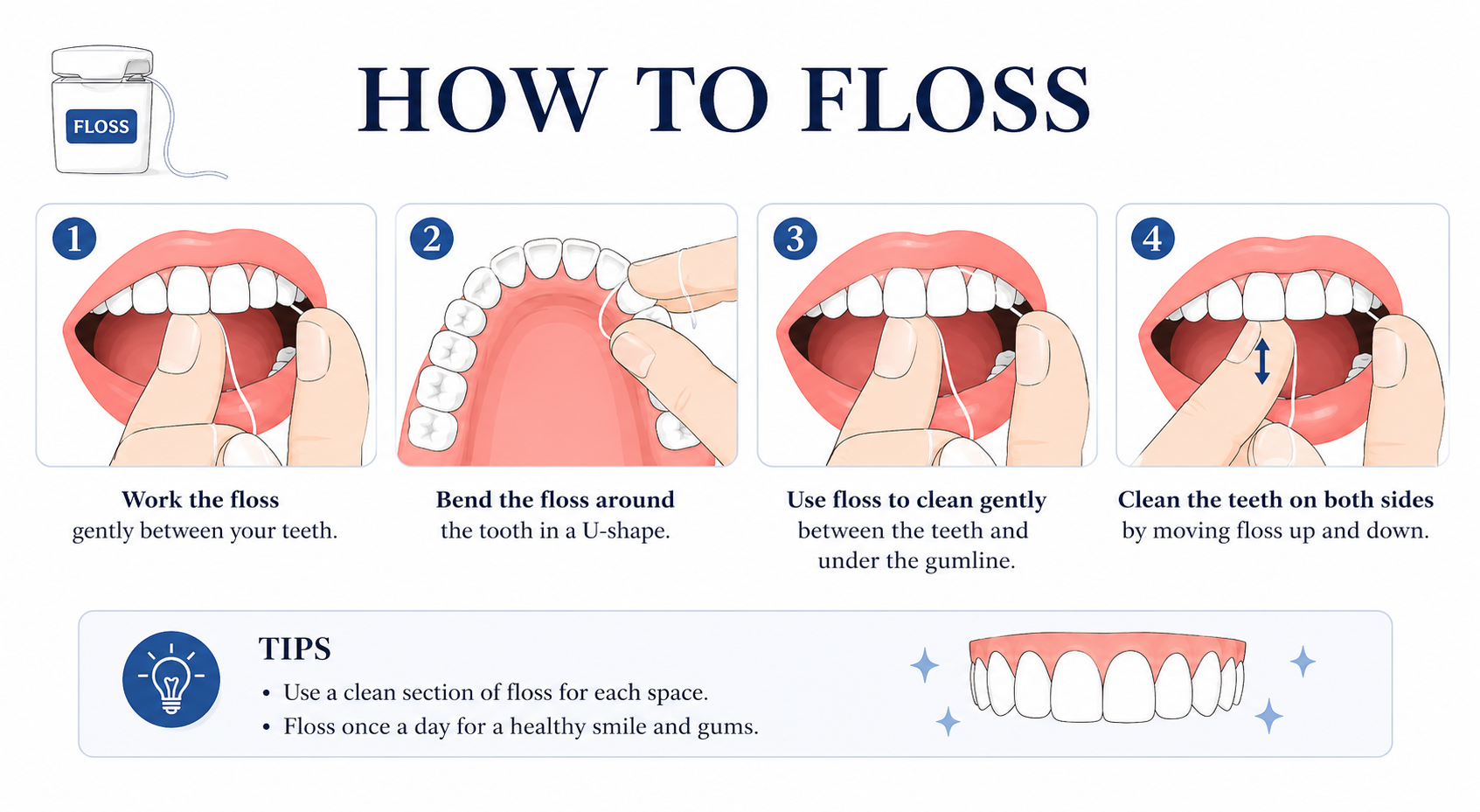
Tips To Reduce Bleeding Gums
Floss consistently
Daily flossing is generally more effective than flossing occasionally.
Use the correct technique when flossing
Curve the floss around each tooth in a “C-shape” and clean gently beneath the gumline.
Brush gently twice daily
Using a soft-bristled toothbrush with the proper brushing technique.
Consider interdental brushes
For patients with larger gaps between teeth, interdental brushes may sometimes clean more effectively than traditional string floss.
Attend regular dental cleanings
Routine scaling at the dentist helps remove tartar buildup and keeps the gums healthy.
When Should I See A Dentist?
You should consider arranging a dental check-up if:
your gums bleed every time you brush or floss,
the bleeding continues after 1 - 2 weeks of daily flossing,
your gums look swollen, red, or tender,
you have persistent bad breath,
your teeth feel loose,
your gums appear to be receding,
you experience pain when chewing,
or it has been more than 6 months since your last professional cleaning.
Final Thoughts
Bleeding gums are commonly caused by plaque buildup and gum inflammation. In many cases, improving your brushing and flossing technique, together with regular dental cleanings, can help keep the gums healthy and prevent the condition from worsening.
As with most dental problems, early detection and treatment are usually much simpler and less costly than treating more serious problems later on. If your gums bleed regularly when brushing or flossing, it is advisable to arrange for a dental check-up.
Please note that this article is intended for general educational purposes and is based on clinical experience and current scientific evidence.
Sources:
American Dental Association. Bleeding Gums. MouthHealthy. Accessed May 13, 2026.
American Dental Association. Flossing. MouthHealthy. Accessed May 13, 2026.
Centers for Disease Control and Prevention. Gum Disease Facts. CDC Oral Health. Updated May 15, 2024.
National Health Service. Gum Disease. NHS. Reviewed February 19, 2024.
National Dental Centre Singapore. Flossing: How to Do It Right and Best Time to Floss. HealthXchange. Accessed May 13, 2026.