If you have a missing tooth, a dental implant can provide a fixed, long-term replacement that looks and functions much like a natural tooth.
But how much do dental implants cost in Singapore? Are they painful? How long does the treatment take? And are all dental implants the same?
This guide covers the key things you should know before deciding whether dental implants are right for you.
What Are Dental Implants?
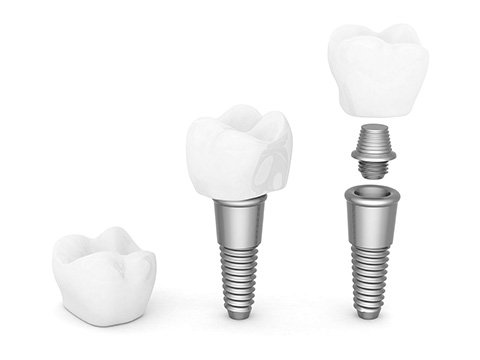
A dental implant is an artificial tooth root placed into the jawbone to support a replacement tooth.
A typical dental implant has three components:
Implant: Placed into the jawbone and acts as the tooth root.
Abutment: Connects the implant to the crown.
Crown: The visible replacement tooth.
Once the implant has integrated with the surrounding bone, it provides a stable foundation for the replacement tooth.
Dental implants can replace a single tooth, several missing teeth, or support a full set of replacement teeth.
How Much Do Dental Implants Cost in Singapore?
The cost of a dental implant depends on your individual case and treatment needs.
The total cost may include:
Consultation
X-rays or 3D scans
Implant placement
Abutment and crown
Temporary tooth, if required
Bone grafting or other procedures
When comparing prices, check what is included. A lower advertised price may exclude the crown, imaging or additional procedures. The implant brand can also affect the cost, with well-established brands and a long clinical track record often costing more than newer or lesser-known brands.
In Singapore, Medisave may also be used to cover part of the treatment cost, subject to applicable limits and eligibility.
How Does the Dental Implant Procedure Work?
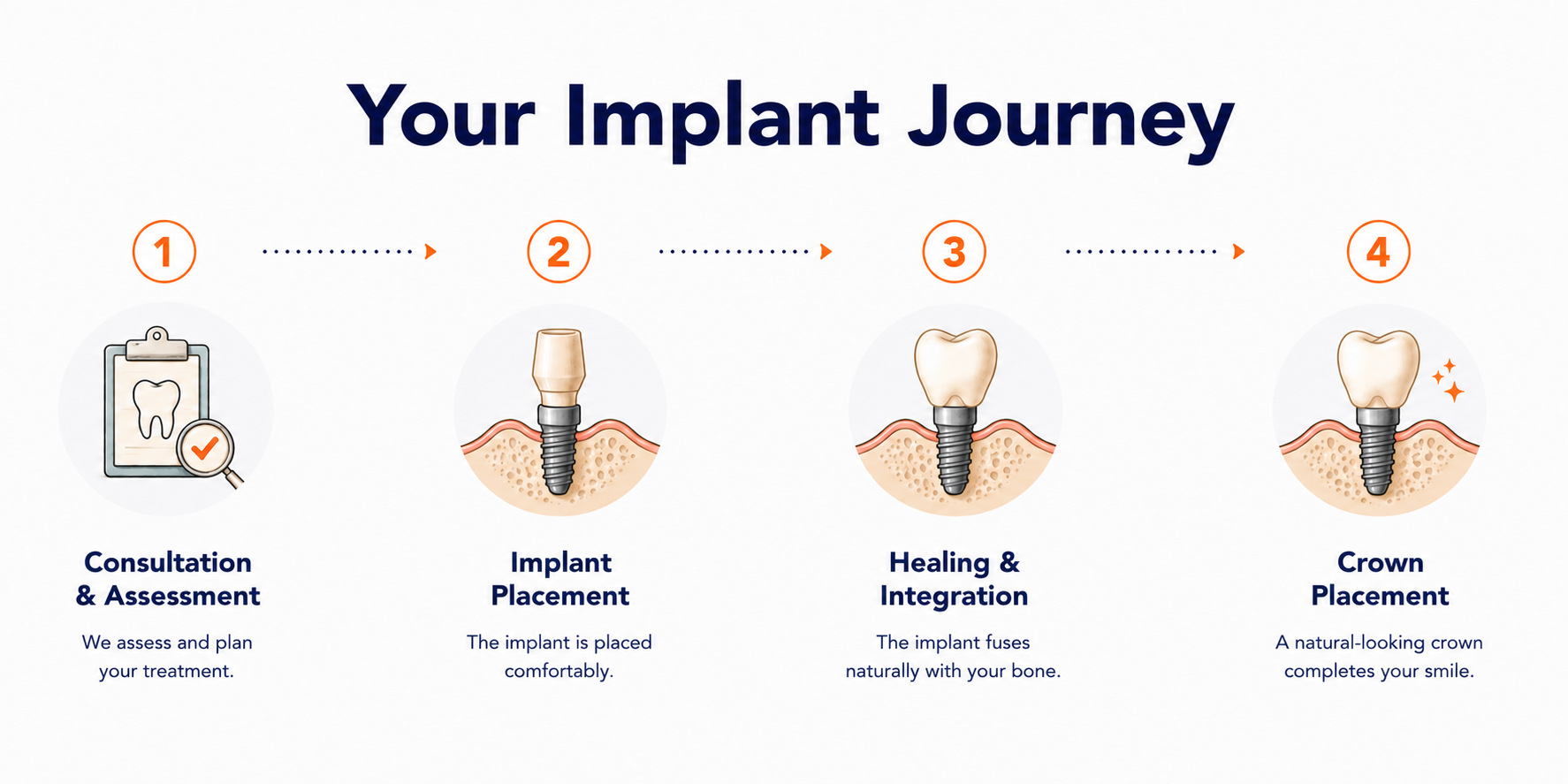
1. Consultation and Assessment
Your dentist will assess your teeth, gums and jawbone. X-rays or a 3D scan may be taken to check the bone and plan the implant placement.
2. Implant Placement
The implant is placed into the jawbone under local anaesthesia.
3. Healing
The implant needs time to integrate with the surrounding bone, a process known as osseointegration.
4. Abutment and Crown
Once the implant has healed, the abutment and final crown (replacement tooth) can be fitted.
How Long Does a Dental Implant Take?
The implant placement procedure itself may be relatively short, but the overall treatment can take several months because the implant needs time to heal and integrate with the jawbone.
The timeline varies between patients.
Some patients may be suitable for immediate implant placement after an extraction, while others may need to wait for the area to heal or require a bone graft.
Your dentist can provide a more accurate timeline after assessing your case.
Are Dental Implants Painful?
Dental implant surgery is performed under local anaesthesia, so you should not feel pain during the procedure.
Some discomfort, swelling or tenderness can occur after surgery. This usually improves as the area heals. Your dentist will provide specific instructions to help you manage your recovery.
Who Is Suitable for Dental Implants?
Many adults with missing teeth can be suitable for dental implants, but an assessment is necessary.
Important considerations include:
Sufficient bone: The jawbone needs to provide adequate support. A bone graft may sometimes be recommended if there is insufficient bone.
Healthy gums: Existing gum disease should generally be treated before implant placement.
General health: Certain medical conditions, medications and lifestyle factors can affect healing.
Smoking: Smoking can impair healing and increase the risk of complications around dental implants.
How Long Do Dental Implants Last?
Dental implants are designed to be a long-term solution. Their longevity depends on factors such as oral hygiene, gum health, smoking, bite forces and regular dental care.
What Happens If You Don't Replace a Missing Tooth?
A missing tooth may not cause immediate problems, but leaving a space untreated can affect your oral health and function over time.
Depending on its location, neighbouring teeth may shift, your bite may change and chewing can become more difficult.
The bone supporting a missing tooth can also gradually be lost because it is no longer supporting a natural tooth root.
Not every missing tooth necessarily needs to be replaced with an implant. Your dentist can assess your situation and discuss the available options.

Bite changes due to missing teeth that are not replaced
Frequently Asked Questions
How much do dental implants cost in Singapore?
The cost depends on the number of implants required, the brand of implant used, and whether additional procedures such as bone grafting are needed. Ask for an itemised treatment plan so you understand the total cost.
Can I get an implant immediately after a tooth extraction?
Sometimes. Immediate implant placement is possible in selected cases, depending on factors such as the condition of the tooth, surrounding bone and gums.
Do I need a bone graft?
Not necessarily. A bone graft may be recommended if there is insufficient bone to provide adequate support for the implant.
Can smokers get dental implants?
Yes, but do note that smoking can affect healing and increase the risk of complications. Your dentist can assess your individual circumstances.
What happens if a dental implant fails?
Implant failure can occur for several reasons. If an implant develops a problem, your dentist will assess the cause and recommend the appropriate treatment.
Final Thoughts
Dental implants can provide a stable, natural-looking and long-term solution for missing teeth.
However, every patient is different. An assessment of your oral condition is the best way to determine whether implant treatment is suitable.
Please note that this article is intended for general educational purposes and is based on clinical experience and current scientific evidence.
Sources:
American Dental Association. Dental Implants.
Cambridge University Hospitals NHS. Dental Implants in Restorative Dentistry.