
How to Brush and Floss Properly
A step-by-step guide to help you maintain healthy teeth and gums.
Brush twice a day — once in the morning, and once at night.
Floss once a day — at night, before brushing.
How To Brush Correctly
The Basics of Brushing
Use a soft-bristled toothbrush
Hold the brush at about a 45° angle towards the gumline
Brush gently with small, circular motions
Brush the front, back and chewing surfaces of every tooth
Common Brushing Mistakes
Brushing too hard
Missing the inside surfaces of your teeth
Scrubbing back and forth aggressively
Ignoring plaque build up at the gumline
How to Floss Correctly
The Basics of Flossing
Use about 40 to 45 cm of floss
Gently guide it between your teeth — don't snap it into your gums
Curve the floss into a C-shape around each tooth
Gently move it up and down along the tooth and below the gumline
Clean both sides of every tooth
Common Flossing mistakes
Not forming a C-shape around the tooth
Not flossing below the gumline where bacteria can build up
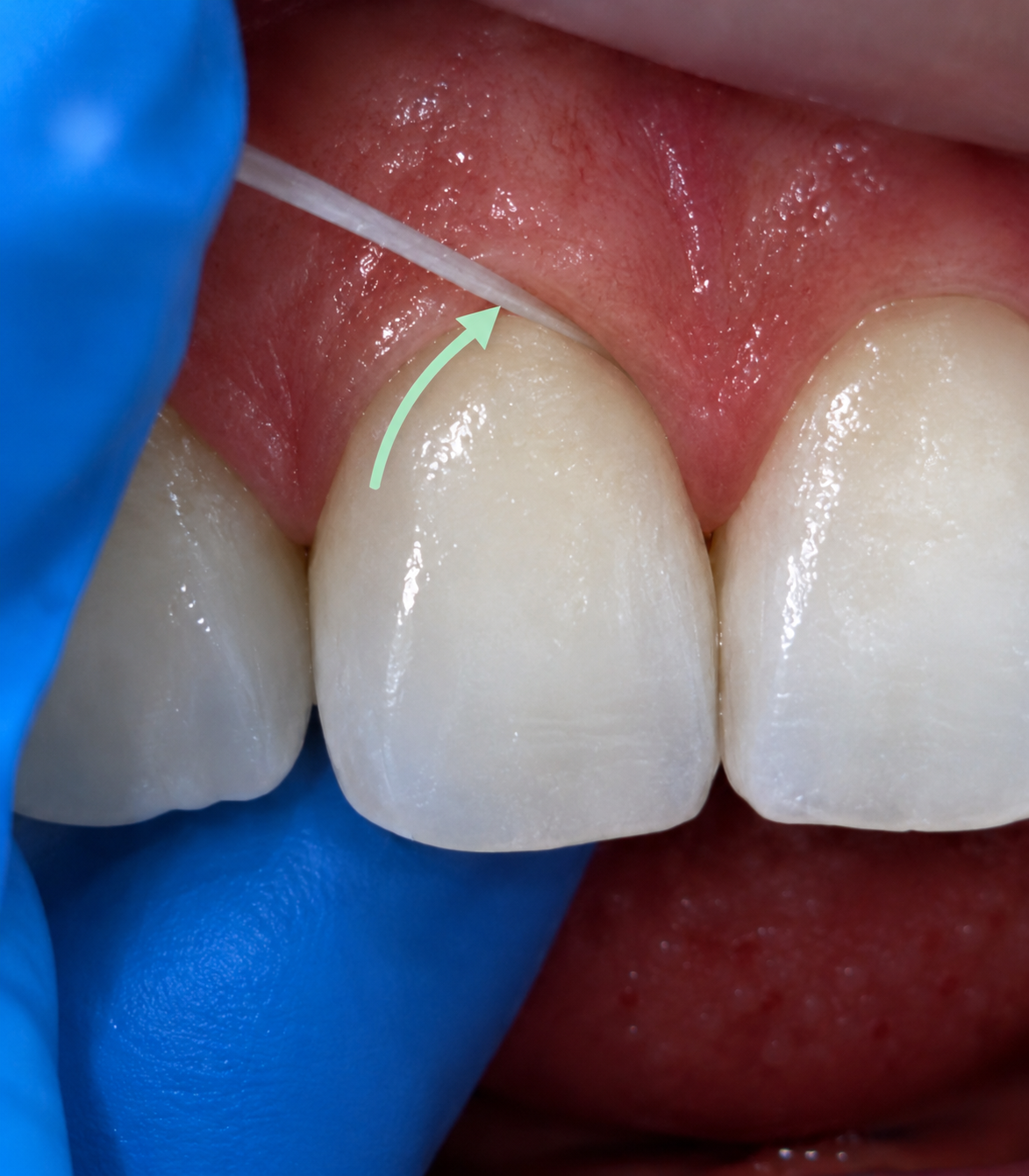
Floss below the gumline
What if your gums bleed when flossing?
Bleeding gums can be a sign of gum inflammation caused by plaque and calculus build-up.
Continue flossing gently and consistently.
If bleeding persists, or your gums are swollen or painful, see your dentist for an assessment and professional cleaning if needed.
Please note that this article is intended for general educational purposes only.
Sources:
Ausenda F, et al. (2019). The Effect of the Bass Intrasulcular Toothbrushing Technique on the Reduction of Gingival Inflammation.
McGuire JA, et al. (2024). Efficacy of flossing and mouth rinsing regimens on plaque and gingivitis.
