How to Choose the Right Dental Products for Your Child
Choosing the right dental products for children is important in building healthy oral habits from a young age. With so many options available, parents should focus on products that are safe, age-appropriate, and easy for children to use consistently.
What Makes a Good Toothbrush for Kids?
Ideally, choose a toothbrush that has these qualities:
Small head
A small toothbrush head allows for precise cleaning, especially along the gumline, the back teeth, teeth grooves and inner corners (usually the most frequently missed areas).
Soft bristles
A soft toothbrush usually has bristles that feel flexible and gentle when you press them against your skin or gums. Soft bristles are usually thin, fine, and densely packed.
Hard bristles do not clean better; technique matters more.
Selected by your child themselves
Allowing your child to choose their own toothbrush helps them feel involved in their daily routine and builds confidence in self-care. Giving small choices (“Do you want the blue dinosaur brush or the pink unicorn one?”) gives children a sense of control while parents still guide healthy habits.
Toothbrushes should be replaced every three months, or sooner if the bristles become frayed.
Electric or Manual?
Manual Toothbrush
For ages 0-3, we recommend a manual toothbrush. This allows the child to build natural hand dexterity. A manual toothbrush cleans perfectly fine if parents help supervise and brushing technique is good.
Manual brushes are great as they:
are inexpensive,
lightweight,
easy to replace,
and help children learn brushing technique and control.
For toddlers and younger kids, manual brushes are often easier initially because some children dislike the vibration or noise of electric brushes.
Electric Toothbrush
For ages 3 and above, it is suitable to introduce an electric toothbrush. This holds true especially for reluctant brushes, children who rush through brushing or teenagers with braces.
Electric brushes can help because:
the brush does part of the cleaning motion,
many include 2-minute timers,
some have pressure sensors,
and apps/music can improve brushing compliance.
What Toothpaste Should My Child Use?
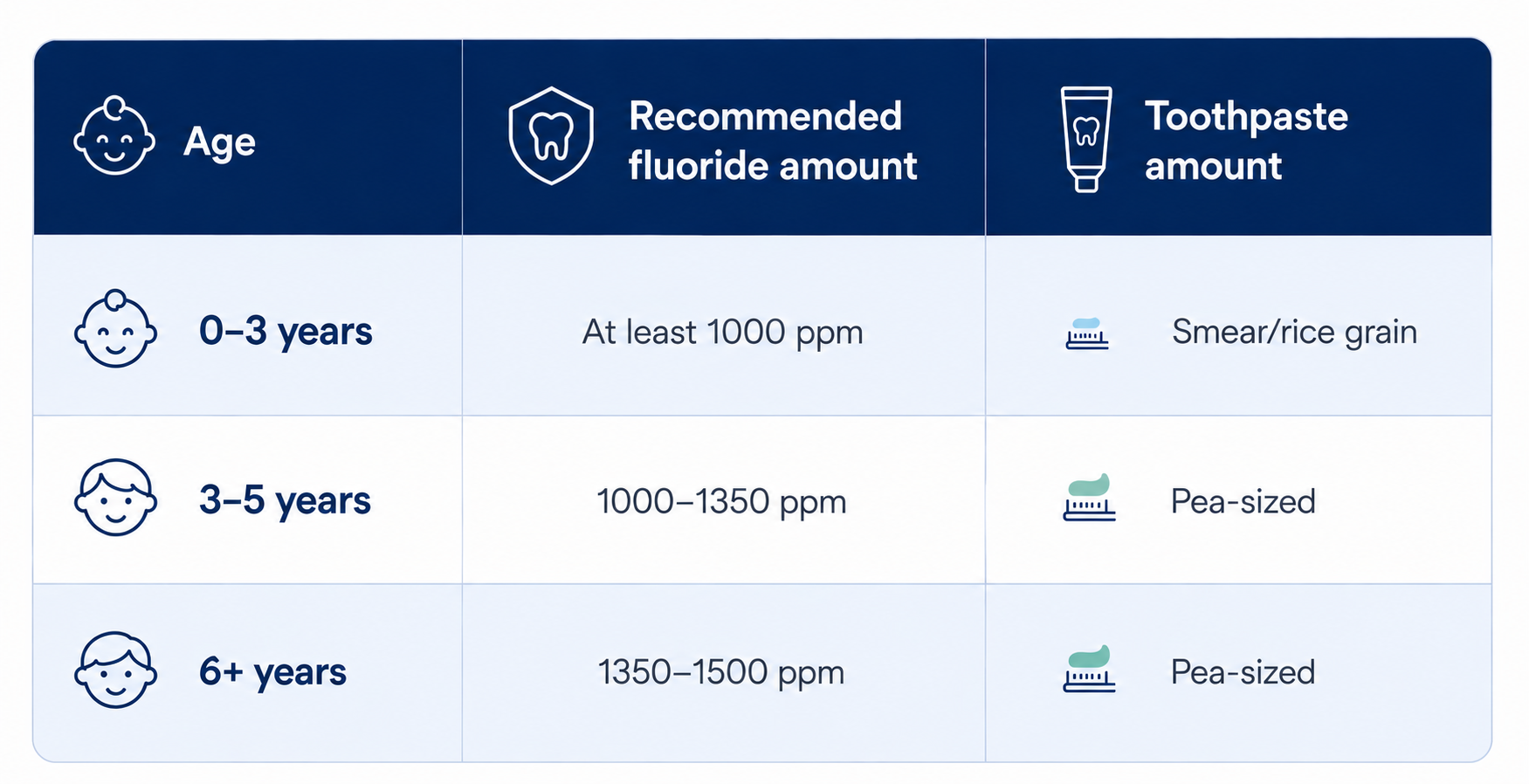
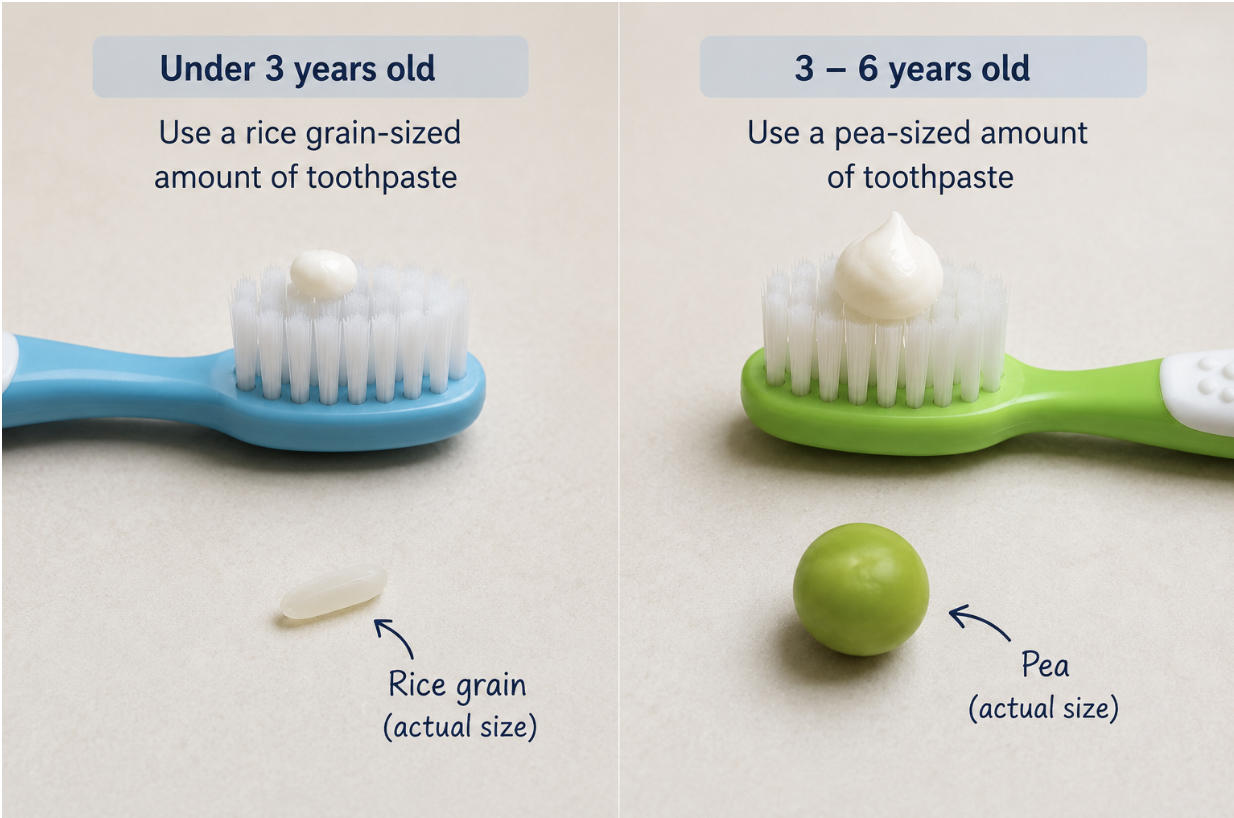
When choosing toothpaste for your child, fluoride content is key. Fluoride helps strengthen enamel and prevent tooth decay.
Young children should always be supervised while brushing to reduce swallowing of toothpaste, as excessive fluoride intake may affect the development of teeth.
When Should Children Start Flossing?
Dental floss can be introduced once teeth begin touching each other. Floss picks designed for children are often easier to handle and may help make flossing less intimidating.
Parents will usually need to help younger children with flossing until they develop the coordination to do it properly themselves.
Should Children Use Mouthwash?
Mouthwash is generally not necessary for younger children unless recommended by your dentist.
Disclosing Tablets
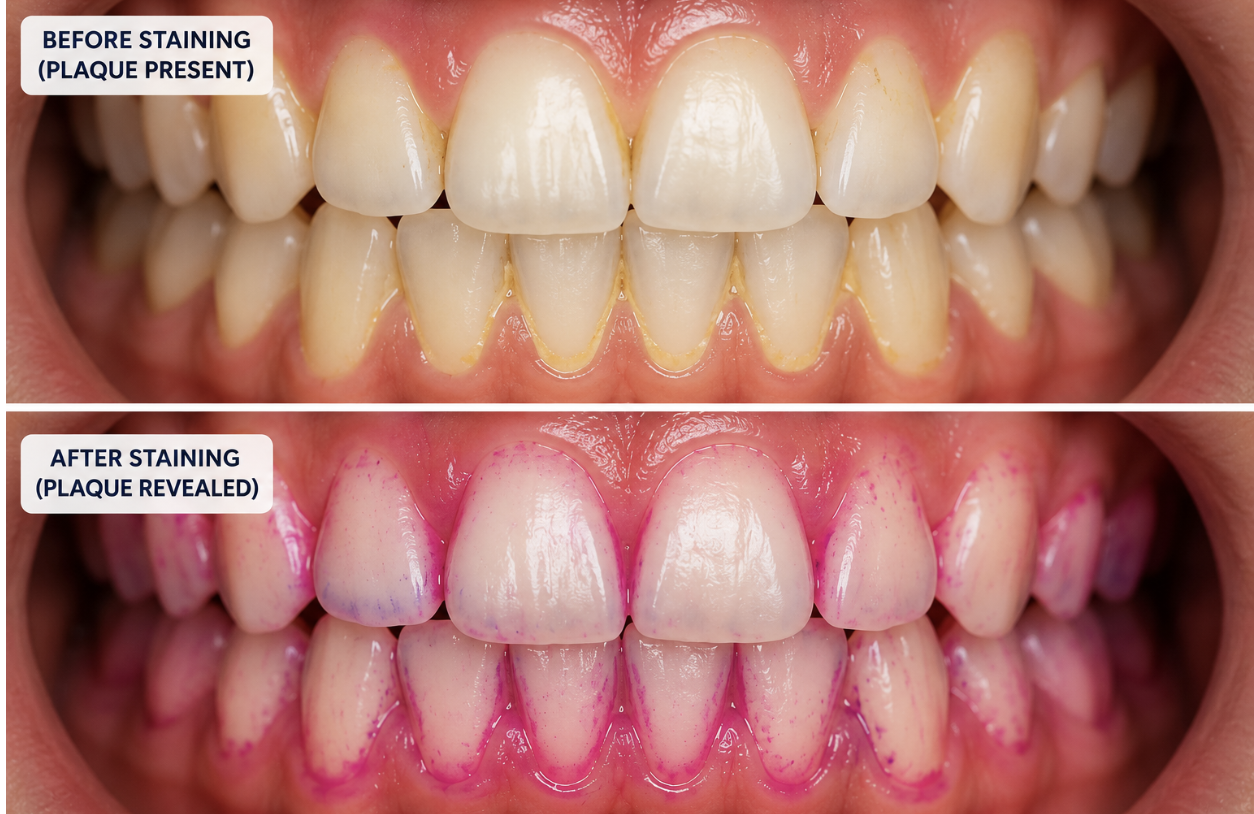
Disclosing tablets are dyes that temporarily stain dental plaque, helping children (and adults) see the areas they missed while brushing.
They can be very useful because they:
make brushing more interactive and fun,
improve brushing technique,
show “hidden” plaque along the gumline and between teeth,
and motivate children to brush more thoroughly.
How to use them:
Brush teeth normally first.
Chew the tablet and swish it around the mouth.
Spit it out - plaque will stain pink, red, blue, or purple depending on the product.
Brush again to remove the coloured areas.
A few things to know about Disclosing Tablets:
The colouring is temporary but can briefly stain the tongue or lips.
It’s best used occasionally (for example once weekly) rather than every day.
Younger children should use them under supervision to avoid swallowing large amounts.
They work as a teaching tool, not a replacement for brushing.
Fluoride Varnish
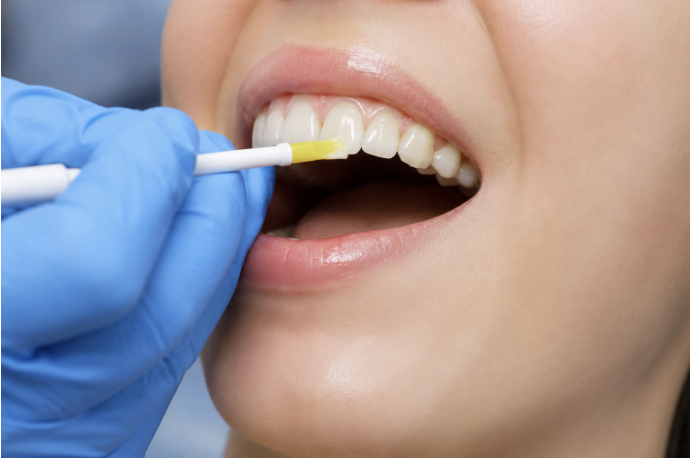
Fluoride varnish is a high-concentration fluoride coating that is painted onto the teeth to help prevent tooth decay and strengthen enamel.
Fluoride varnish helps teeth in 3 main ways:
Rebuilds weakened enamel (remineralisation)
Early decay (white spot lesions) can be reversed by fluoride attracting calcium and phosphate back into enamel.Strengthens enamel
It makes tooth structure more resistant to acid attacks from bacteria and sugar.Reduces bacterial activity
It inhibits the ability of cavity-causing bacteria to produce acid.
This is usually applied by your dentist at check up appointments twice a year.
Final Thoughts
It is important to avoid products that are overly abrasive or marketed with exaggerated claims. Choosing products approved by recognised dental associations can provide reassurance about safety and effectiveness.
Ultimately, the best dental products are the ones children will use regularly and correctly. Combined with regular dental check-ups and a balanced diet low in sugary snacks and drinks, good oral hygiene products can help children maintain healthy smiles for life.
Please note that this article is intended for general educational purposes and is based on clinical experience and current scientific evidence.
Sources:
World Health Organisation (WHO). Fluoride Toothpaste. Available at: https://cdn.who.int/media/docs/default-source/essential-medicines/2021-eml-expert-committee/applications-for-addition-of-new-medicines/a.14_fluoride-toothpaste.pdf
Hamza B, Tanner M, Körner P, Attin T, Wegehaupt FJ. Effect of toothbrush bristle stiffness and toothbrushing force on abrasive dentine wear. International Journal of Dental Hygiene. 2021;19(4):355–359. doi:10.1111/idh.12536
Clark MB, Keels MA, Slayton RL; Section on Oral Health. Fluoride use in caries prevention in the primary care setting. Pediatrics. 2020;146(6):e2020034637. doi:10.1542/peds.2020-034637
Nassar Y, Brizuela M. The Role of Fluoride on Caries Prevention. In: StatPearls [Internet]. Treasure Island (FL): StatPearls Publishing; 2026. Available at: https://www.ncbi.nlm.nih.gov/books/NBK587342/