Why Are My Teeth Sensitive?
Ever felt a sudden sharp 'zing' when enjoying an ice cream or sipping a hot coffee? That's tooth sensitivity, and it's actually more common than you think. Tooth sensitivity is characterised by a brief, sharp pain that can affect one or several teeth. It is commonly triggered by cold, hot or sweet foods, brushing or even breathing in cold air.
In fact, studies suggest that as many as one in two people experience tooth sensitivity at some point. Because the discomfort is often brief, many people simply learn to live with it or dismiss it as a minor inconvenience. However, tooth sensitivity can sometimes be an early warning sign of a more serious dental problem, such as tooth decay, gum disease, tooth wear, or even a cracked tooth.
What Causes Tooth Sensitivity?
Underneath the hard outer enamel of the tooth lies a softer layer called dentine. When enamel wears down or gums recede, this layer becomes exposed. Because dentine contains microscopic channels that lead directly to the nerve of the tooth, hot, cold or sweet foods can trigger the sharp sensation commonly associated with tooth sensitivity.
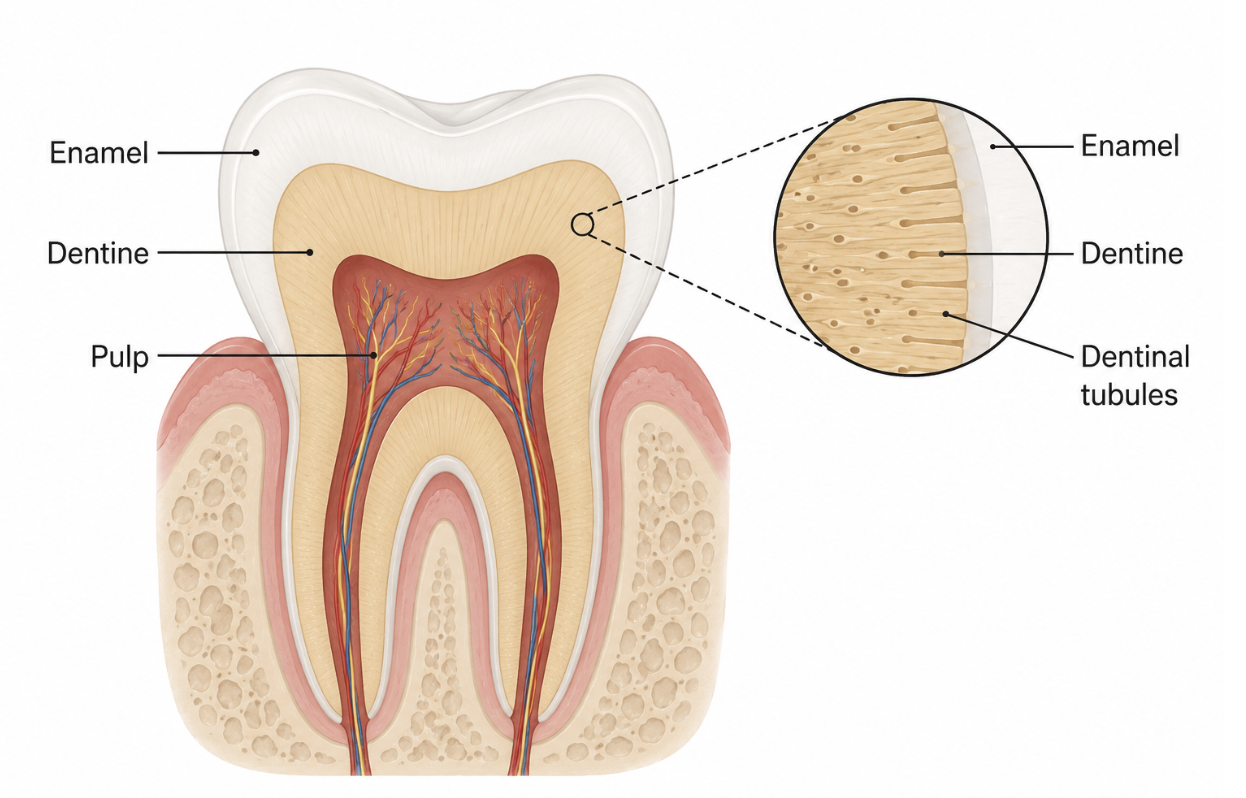
Sensitive teeth often occur when the protective outer layer of the tooth wears away, exposing the underlying dentine.
Common Causes of Tooth Sensitivity
Acidic Diet
Frequent consumption of acidic foods and drinks, such as citrus fruits, soft drinks, and sports drinks, can gradually wear away the protective enamel layer of the teeth. This may expose the underlying dentine, leading to sensitivity.
Teeth Grinding (Bruxism)
Grinding or clenching your teeth can cause excessive wear of the tooth surface over time, exposing dentine and increasing sensitivity.
Aggressive Brushing
Brushing too hard or using improper brushing techniques can wear down tooth surfaces and contribute to gum recession, exposing sensitive root surfaces.
Gum Recession
As gums recede, the root surfaces of the teeth become exposed. Unlike enamel, root surfaces are more susceptible to sensitivity.
Tooth Decay and Cracked Teeth
Tooth decay and cracks in the tooth can expose sensitive areas and cause sharp pain when consuming hot, cold, or sweet foods and drinks. As the condition progresses, the sensitivity may become more intense and prolonged due to inflammation or damage to the tooth nerve.
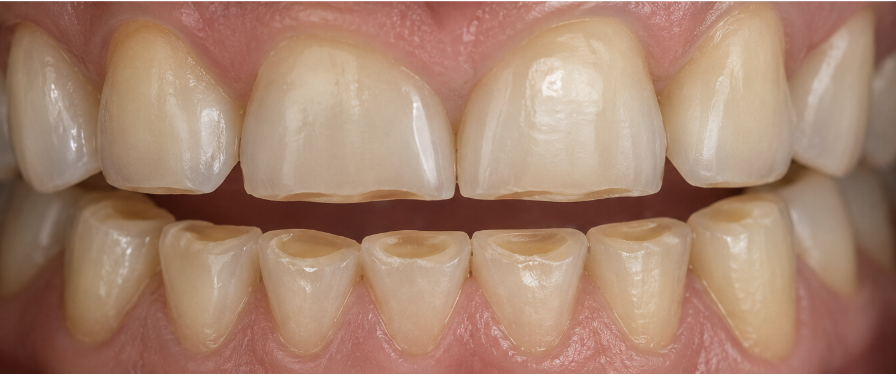
Tooth sensitivity caused by heavily worn down and exposed teeth
Treatment Options for Sensitive Teeth
Use a Soft-Bristled Toothbrush
Switching to a soft-bristled toothbrush and using a gentle brushing technique can help prevent further wear and gum recession.
Sensitive Toothpaste
Toothpastes formulated for sensitive teeth, particularly those containing potassium nitrate, may help reduce sensitivity over time. Avoid toothpastes containing overly abrasive ingredients, such as charcoal.
Professional Fluoride Treatment
Fluoride gels and varnishes applied by a dentist can strengthen tooth surfaces and reduce sensitivity. Regular fluoride applications may be recommended for patients with ongoing sensitivity.
Desensitising Products
Daily use of professionally recommended fluoride-containing desensitising pastes can help provide ongoing relief of tooth sensitivity.
Fillings
When sensitivity is caused by tooth decay, exposed roots, tooth wear, or small defects in the tooth structure, tooth-coloured fillings can protect the affected area and reduce discomfort.
Root Canal Treatment
If sensitivity is caused by severe decay, deep cracks or irreversible nerve inflammation in the tooth, root canal treatment may be required to get rid of the pain and preserve the tooth.Gum Grafting
For patients with significant gum recession, gum grafting with a specialist periodontist may be recommended to cover exposed root surfaces, reduce sensitivity, and improve gum health.
Final Thoughts
Tooth sensitivity can often have more than one contributing factor, making it difficult to identify the cause on your own. If your sensitivity persists, worsens, or affects your daily activities, it is worth having it assessed by a dentist.
Early diagnosis can help identify the underlying cause and prevent more serious dental problems from developing. While occasional sensitivity may not be a cause for concern, persistent sensitive teeth should never be ignored.
Please note that this article is intended for general educational purposes and is based on clinical experience and current scientific evidence.
Sources:
Martins, C.C., Riva, J.J., Firmino, R.T. and Schünemann, H.J. (2022). Formulations of desensitizing toothpastes for dentin hypersensitivity: a scoping review. Journal of Applied Oral Science, 30. doi:https://doi.org/10.1590/1678-7757-2021-0410.
Petersson, L.G. (2012). The role of fluoride in the preventive management of dentin hypersensitivity and root caries. Clinical Oral Investigations, [online] 17(S1), pp.63–71. doi:https://doi.org/10.1007/s00784-012-0916-9.