Veneers: Are They Worth the Investment?
Introduction
One of the more common cosmetic dental questions we receive is:
“I want that perfect smile we see in movies - should I get veneers?”
This is usually followed by a few other questions:
Will my teeth become sensitive after veneers?
What happens if veneers come off?
Do veneers last forever?
What if I do not like the shape or colour?
This guide explains what veneers are, the differences between porcelain and composite veneers, expected costs, longevity, risks, and which cases veneers may or may not be suitable for.
What Exactly Are Veneers?
Veneers are thin shells bonded onto the front surface of teeth to improve their shape, colour and overall appearance. Think of them as thin custom-made ceramic covers for teeth - similar in concept to how acrylic nails sit over natural nails.
In many cases, a small amount of the outer tooth surface is reduced to create space for the veneers so that the final result looks natural and not bulky.
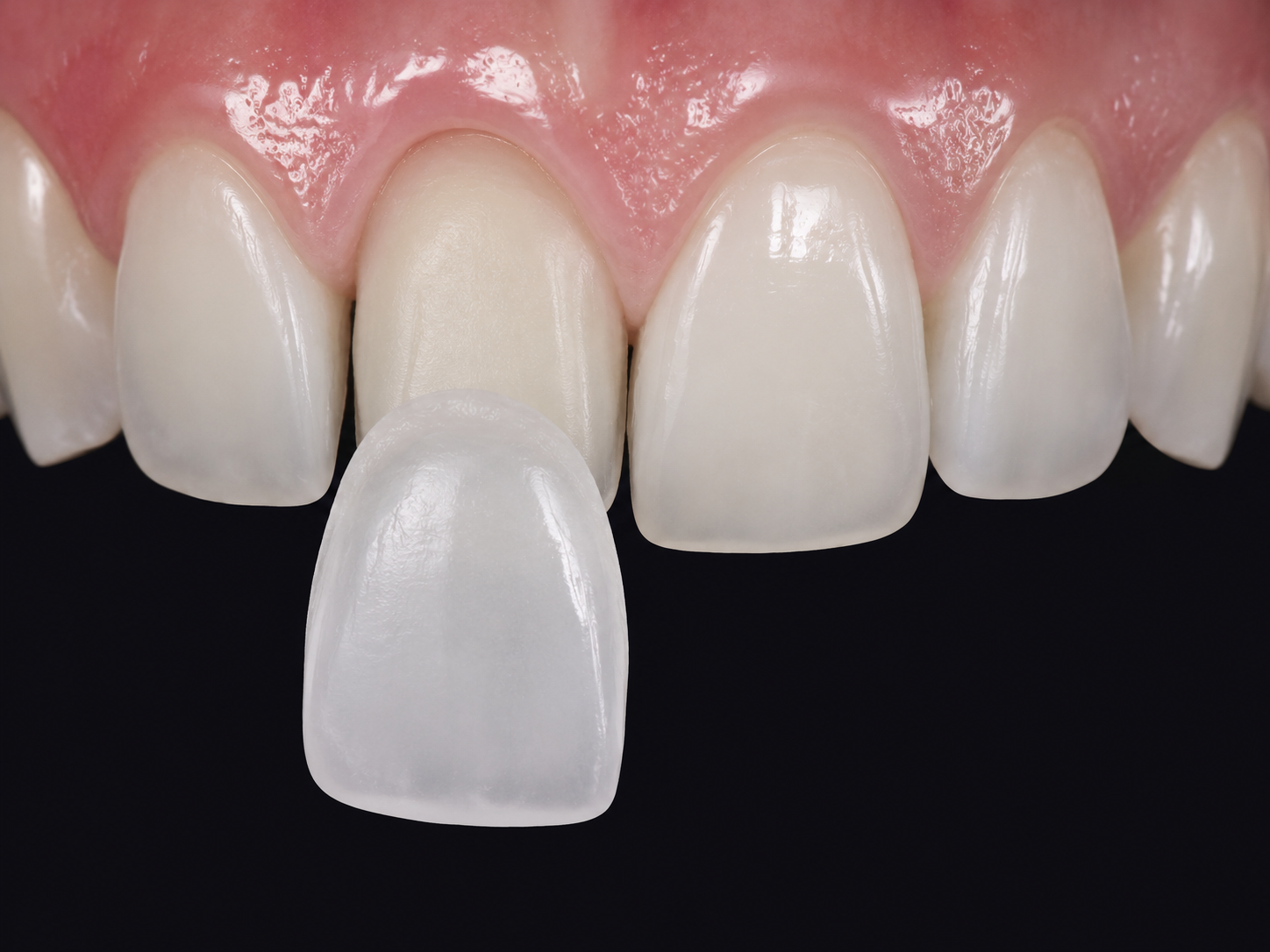
There are two main types of veneers:
porcelain veneers,
and composite veneers.
Porcelain vs Composite Veneers
Porcelain Veneers
Porcelain veneers are thin laboratory-fabricated ceramic shells custom made by a dentist and dental laboratory. They are generally considered the premium veneer option because they mimic natural teeth more closely and have superior physical properties.
Digital smile design can be performed before treatment begins, allowing patients to preview potential changes in tooth shape and colour.
Porcelain veneers in Singapore typically cost between $950 to $2000 per tooth.
Composite Veneers
Composite veneers are made using tooth-coloured resin material commonly used in dental fillings.
They are generally more affordable, and quicker to place. However, composite veneers are usually less durable than porcelain veneers and are more prone to staining and wear over time.
Composite veneers in Singapore typically cost between $200 to $400 per tooth.
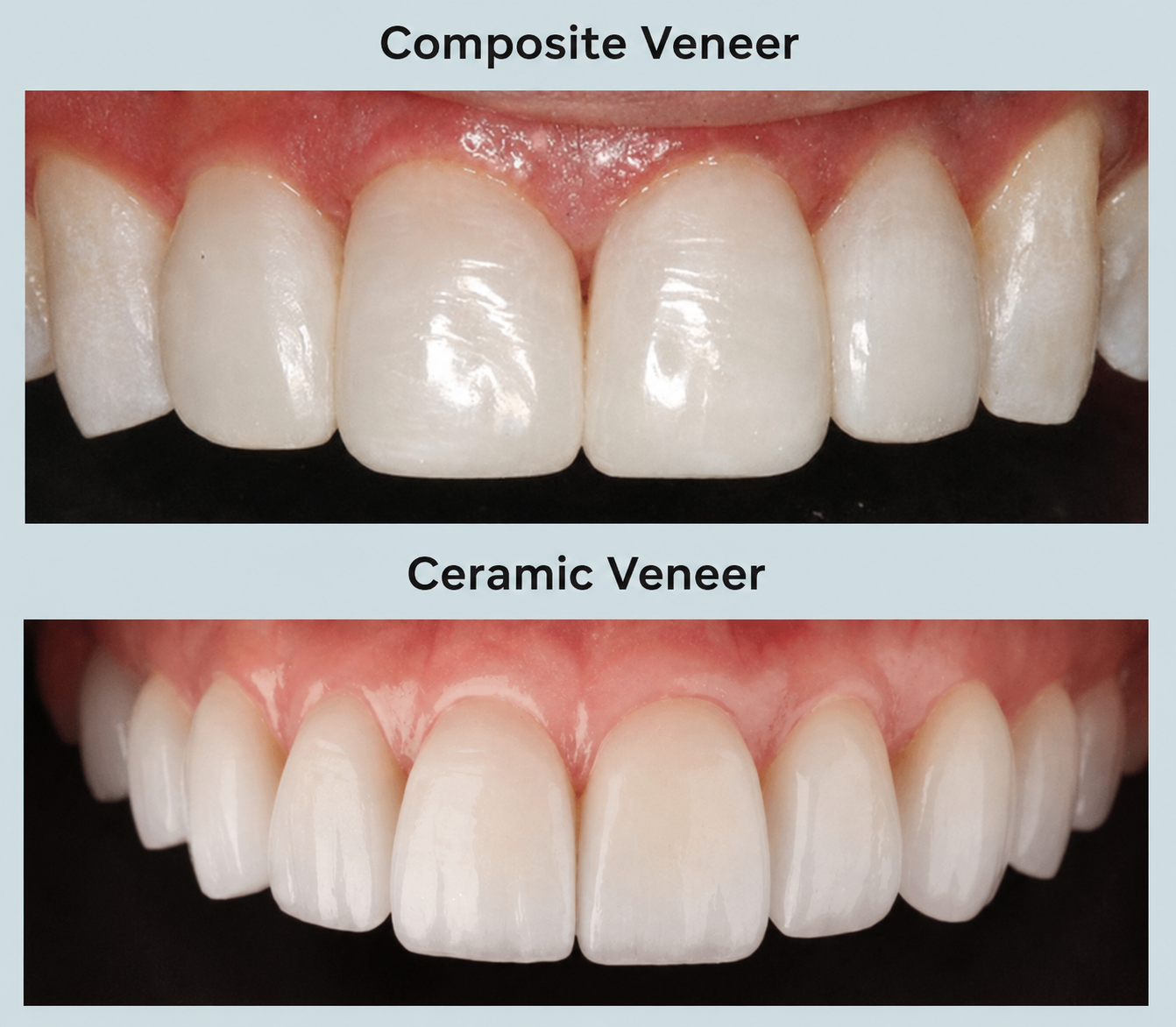
Composite Veneer (Top), Ceramic Veneer (Bottom)
Porcelain vs Composite Veneers: Pros and Cons
Porcelain Veneers
Pros
More durable and stain-resistant
More natural translucency and aesthetics
Longer lifespan - 10+ years (95.5% chance)
Better colour stability
Cons
More expensive
Longer treatment process
Damaged veneers usually require replacement rather than repair
Composite Veneers
Pros
Lower cost
Can often be completed in one visit
Easier to repair or modify
Usually requires less removal of natural tooth structure
Cons
Shorter lifespan
More prone to staining and wear
Does not look as good as porcelain veneers
When Should You Consider Veneers?
Veneers are commonly used to improve teeth that have aesthetic issues which cannot be corrected well with whitening or minor reshaping alone.
Common indications include:
internal stains that do not respond well to whitening,
chipped or fractured teeth,
uneven tooth shape or size,
and patients seeking a fuller or longer smile appearance.
When Are Veneers Not Recommended?
Veneers may not be suitable in certain situations, including:
active teeth grinding or clenching,
uncontrolled gum disease or untreated tooth decay,
significant overall bite or alignment issues,
and heavy smoking or coffee consumption that may increase staining around veneer margins.
In some cases, orthodontic treatment or gum treatment may be recommended before considering veneers.
What Is the Process of Getting Veneers?
The veneer process usually involves several stages:
Consultation and smile assessment
Digital planning and Smile Design
Preparing the teeth
Fitting on Temporary veneers (for porcelain cases)
Laboratory fabrication
Final veneer fitting and bonding
How Long Do Veneers Last?
Porcelain veneers can often last 10 years or longer with appropriate care and maintenance.
Composite veneers generally have a shorter lifespan and may require maintenance or replacement after several years depending on wear and staining.
The longevity of veneers depends on factors such as:
oral hygiene,
grinding habits,
and regular dental maintenance.
How Do You Maintain Veneers?
To maintain veneers and surrounding teeth:
attend regular dental cleaning appointments,
avoid biting excessively hard foods such as ice or nuts,
maintain good oral hygiene,
and consider wearing a night guard if you grind your teeth during sleep.
While veneers themselves cannot decay, the natural teeth underneath and around them still require proper care.
Alternatives to Veneers
As veneers usually involve irreversible removal of some natural tooth structure, it is important to consider more conservative alternatives first.
Professional teeth whitening may be suitable for patients whose main concern is tooth colour rather than tooth shape or structure. However, whitening has limitations and may not be effective for certain deep stains or heavily restored teeth.
Orthodontic Treatment
Braces or clear aligners may also improve smile aesthetics by correcting spacing between teeth, and misaligned teeth. Patients looking to improve protrusive or “buck teeth” generally benefit more from orthodontic treatment compared to veneers.
Unlike veneers, orthodontic treatment repositions natural teeth without permanently removing healthy tooth structure, making it a more conservative long-term option for suitable cases.
Final Thoughts
Modern aesthetic dentistry offers many different treatment options to improve smile appearance, including veneers, whitening, braces, clear aligners and crowns.
While veneers can produce significant aesthetic improvements, they are not always the most appropriate solution for every patient. In some cases, cheaper and more conservative options such as whitening or orthodontic treatment may achieve the desired result.
The best aesthetic outcomes usually come from selecting the treatment option most suited to the patient’s individual needs and goals following a comprehensive consultation and smile assessment with your dentist.
Please note that this article is intended for general educational purposes and is based on clinical experience and current scientific evidence.
Sources:
Alenezi A, Alsweed M, Alsidrani S, Chrcanovic BR. Long-Term Survival and Complication Rates of Porcelain Laminate Veneers in Clinical Studies: A Systematic Review. J Clin Med. 2021;10(5):1074.
Coelho-de-Souza FH, Gonçalves DS, Sales MP, et al. Direct Anterior Composite Veneers in Vital and Non-Vital Teeth: A Retrospective Clinical Evaluation. J Dent. 2015;43(11):1330–1336.
Alothman Y, Bamasoud MS. The Success of Dental Veneers According to Preparation Design and Material Type. Open Access Maced J Med Sci. 2018;6(12):2402–2408.