
Do I Need To Remove My Wisdom Tooth?
Introduction
Wisdom teeth are the last adult teeth to erupt, usually between the ages of 17 to 25. They are often associated with pain, swelling and horror stories from friends or family.
Because they erupt later, there is sometimes insufficient space in the jaw for them to grow properly. This may cause them to become impacted - meaning they may grow sideways, become trapped under the gums or push against neighbouring teeth.
This may lead to:
pain or swelling
infection around the wisdom tooth
food trapping and bad breath
decay affecting nearby teeth
gum inflammation
Not all wisdom teeth need to be removed. However, problematic wisdom teeth may worsen over time if left untreated.
In this guide, we explain:
when wisdom tooth removal may be necessary
common signs and symptoms
surgery and recovery
Do Wisdom Teeth Always Need To Be Removed?
Not always.
If a wisdom tooth grows normally, is healthy and can be cleaned properly, removal may not be necessary.
However, removal may be recommended if the wisdom tooth is:
repeatedly infected
causing pain or swelling
decayed
damaging the neighbouring tooth
difficult to clean
associated with gum disease, cysts or other pathology
to free up space to align teeth when doing braces
What Are The Risks Of Wisdom Tooth Removal?
Wisdom tooth removal is generally considered a safe and routine procedure. However, as with any surgery, some risks may include:
swelling and bruising
bleeding or infection
dry socket (when the healing blood clot becomes dislodged, causing pain and delayed healing)
temporary jaw stiffness
temporary numbness of the lip, chin or tongue
In rare cases, nerve injury may be prolonged or permanent, especially when lower wisdom teeth are close to the nerve. Your dentist will usually assess the position of the tooth carefully with X-rays and discuss any specific risks related to your case. More complex cases are usually managed by specialist oral maxillofacial surgeons.
Signs Your Wisdom Tooth May Be Causing Problems
You may require assessment if you experience:
pain, swelling, or recurrent infections at the back of the mouth
pain when chewing
difficulty opening your mouth
bad taste or pus discharge
cheek biting
food trapping around the area
Sometimes, wisdom teeth may also cause problems without obvious pain. Routine dental X-rays are often important to assess the position of the wisdom tooth and surrounding structures.
No Pain Does Not Always Mean No Problem
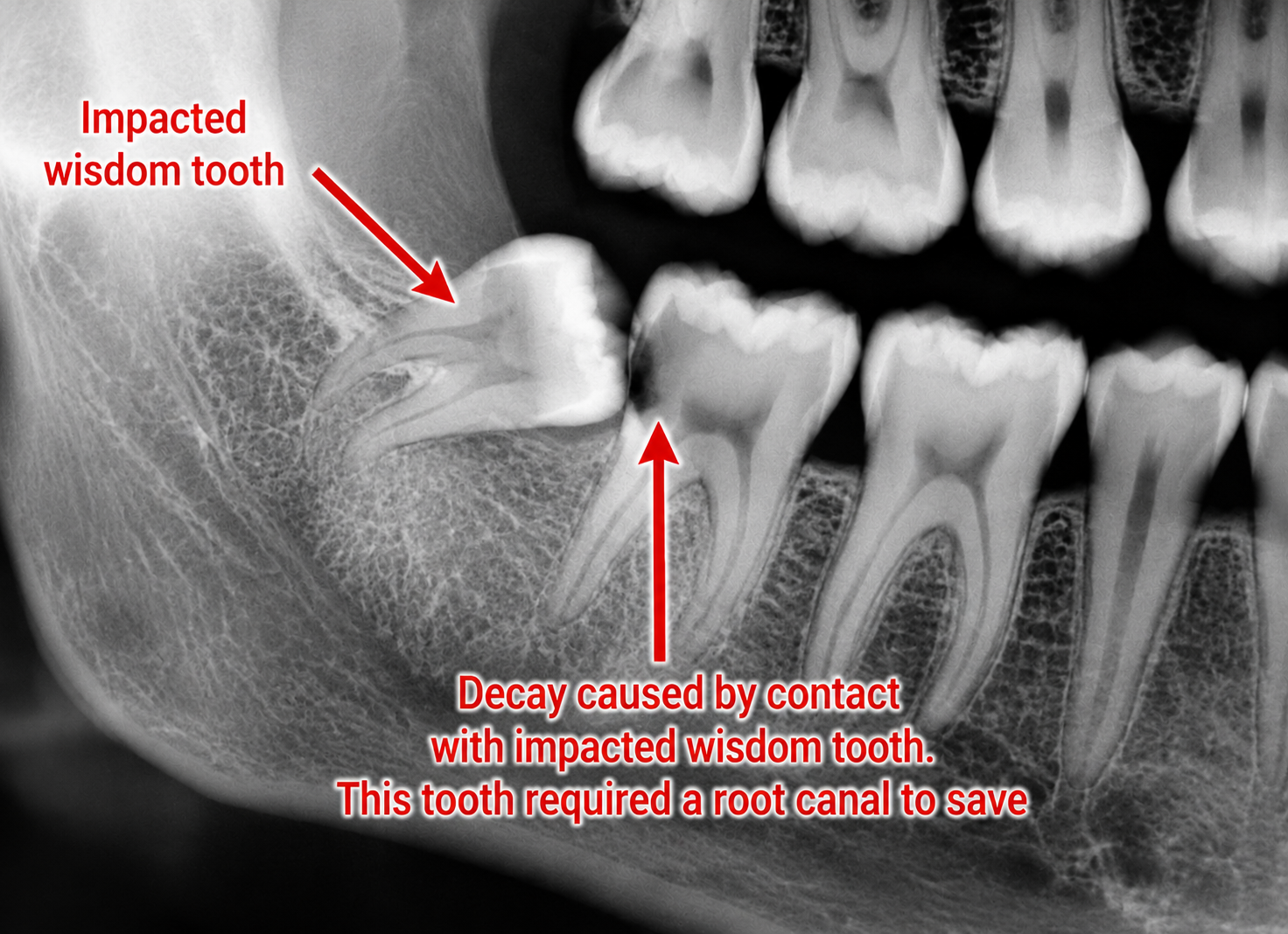
As with many dental conditions, pain does not always appear immediately. Sometimes, significant damage may already be present before symptoms develop. In the example below, an impacted wisdom tooth caused severe decay to the neighbouring tooth despite the patient not experiencing noticeable pain at the time.
In this situation, the patient required:
removal of the impacted wisdom tooth
root canal treatment for the damaged tooth in front
This is one reason why dental X-rays and early assessment are important, even when wisdom teeth are not currently painful.
Who Performs Wisdom Tooth Surgery?
In Singapore, wisdom tooth removal may be performed by:
general dentists
oral and maxillofacial surgeons
Simple extractions are often manageable in a general dental setting. More complex cases may sometimes require referral to an oral surgeon, especially if:
the roots are close to nerves
the tooth is deeply impacted
the roots are curved or complex
surgical risks are higher
Your dentist will usually advise you based on the complexity of the case and the X-ray findings.
Can I Be Sedated Or “Knocked Out” For Wisdom Tooth Surgery?
Yes. Sedation options may be available for anxious patients or more complex procedures.
These may include:
oral sedation
intravenous (IV) sedation
general anaesthesia (GA)
The most suitable option depends on anxiety level, complexity of surgery, and medical history. Not all wisdom tooth procedures require sedation. The majority of patients undergo surgery comfortably under local anaesthesia alone.
What Happens During Wisdom Tooth Surgery?
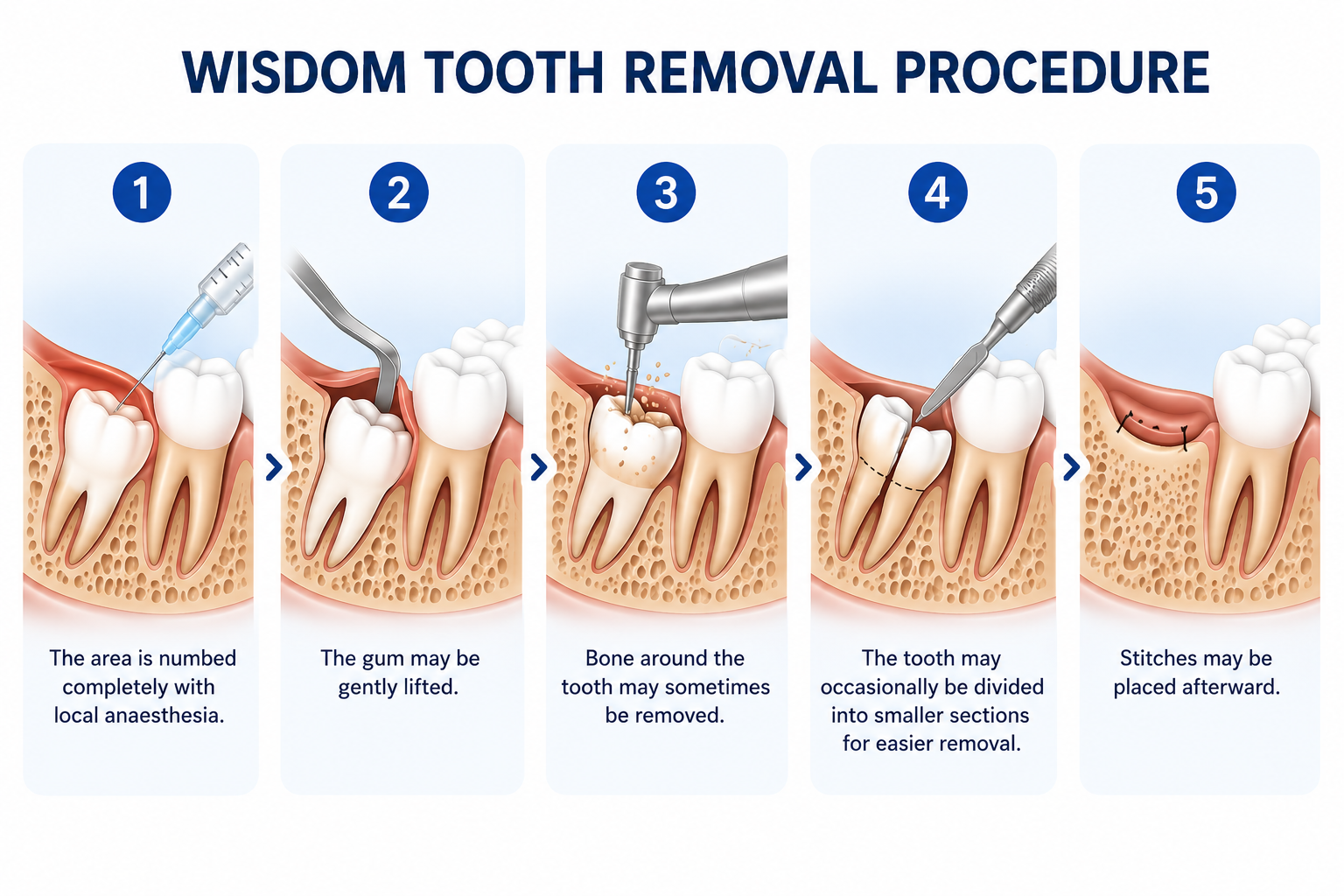
The exact procedure depends on the position of the tooth. In general:
the area is numbed completely with local anaesthesia
the gum may be gently lifted
bone around the tooth may sometimes be removed
the tooth may occasionally be divided into smaller sections for easier removal
stitches may be placed afterward
Recovery After Wisdom Tooth Removal
Recovery varies from person to person. Common temporary symptoms may include:
swelling
mild bleeding
jaw stiffness
bruising
Swelling is usually most noticeable within the first few days and gradually improves thereafter. Most patients are able to return to normal daily activities within several days, although complete healing may take longer.
Tips To Improve Recovery
After surgery, patients are generally advised to:
rest adequately
avoid smoking
avoid vigorous rinsing for the first 24 hours
take prescribed medication as directed
use ice packs intermittently
consume softer foods initially
Cold foods such as ice cream, yoghurt or smoothies are often more comfortable during the first few days.
Warning Signs To Watch Out For
You should seek review if you experience:
worsening swelling after several days
persistent bleeding
fever
foul taste or smell
severe pain not improving with medication
prolonged numbness
These symptoms may indicate complications such as infection or dry socket.
How Much Does Wisdom Tooth Removal Cost In Singapore?
Costs vary depending on:
whether the extraction is surgical or non-surgical
complexity of the tooth position
whether specialist care is required
Estimated private dental fees in Singapore are approximately:
Non-surgical extraction: $200 to $300
Surgical wisdom tooth removal: $950 to $1600
More complex specialist cases may cost higher.
Can Medisave Be Used?
Medisave can generally be used for surgical wisdom tooth removal procedures, subject to prevailing claim limits and eligibility. Patients are advised to check with the clinic regarding estimated claimable amounts and any out-of-pocket costs.
Non-surgical wisdom tooth extractions are typically not Medisave claimable. However, eligible patients may use CHAS subsidies to help offset part of the treatment cost.
Final Thoughts
Wisdom tooth removal is a very common procedure and, for many patients, recovery is often smoother than expected. Not all wisdom teeth require removal. However, early assessment may help prevent more serious infection, decay or damage to neighbouring teeth over time. A proper dental examination and X-rays are important to determine whether wisdom tooth removal is necessary and which treatment approach is most suitable for your condition.
Please note that this article is intended for general educational purposes and is based on clinical experience and current scientific evidence.
