
Root Canal Treatment: What to Expect, Costs & Common Concerns
Introduction
Root canal treatment is often associated with fear, pain and anxiety. However, modern root canal treatment is designed to relieve pain, treat infection and help preserve your natural tooth.
When a tooth becomes badly infected or inflamed, root canal treatment may help save the tooth from extraction while restoring comfort and function.
In this guide, we explain:
when root canal treatment may be needed
what happens during the procedure
recovery and aftercare
common concerns and myths
treatment costs in Singapore
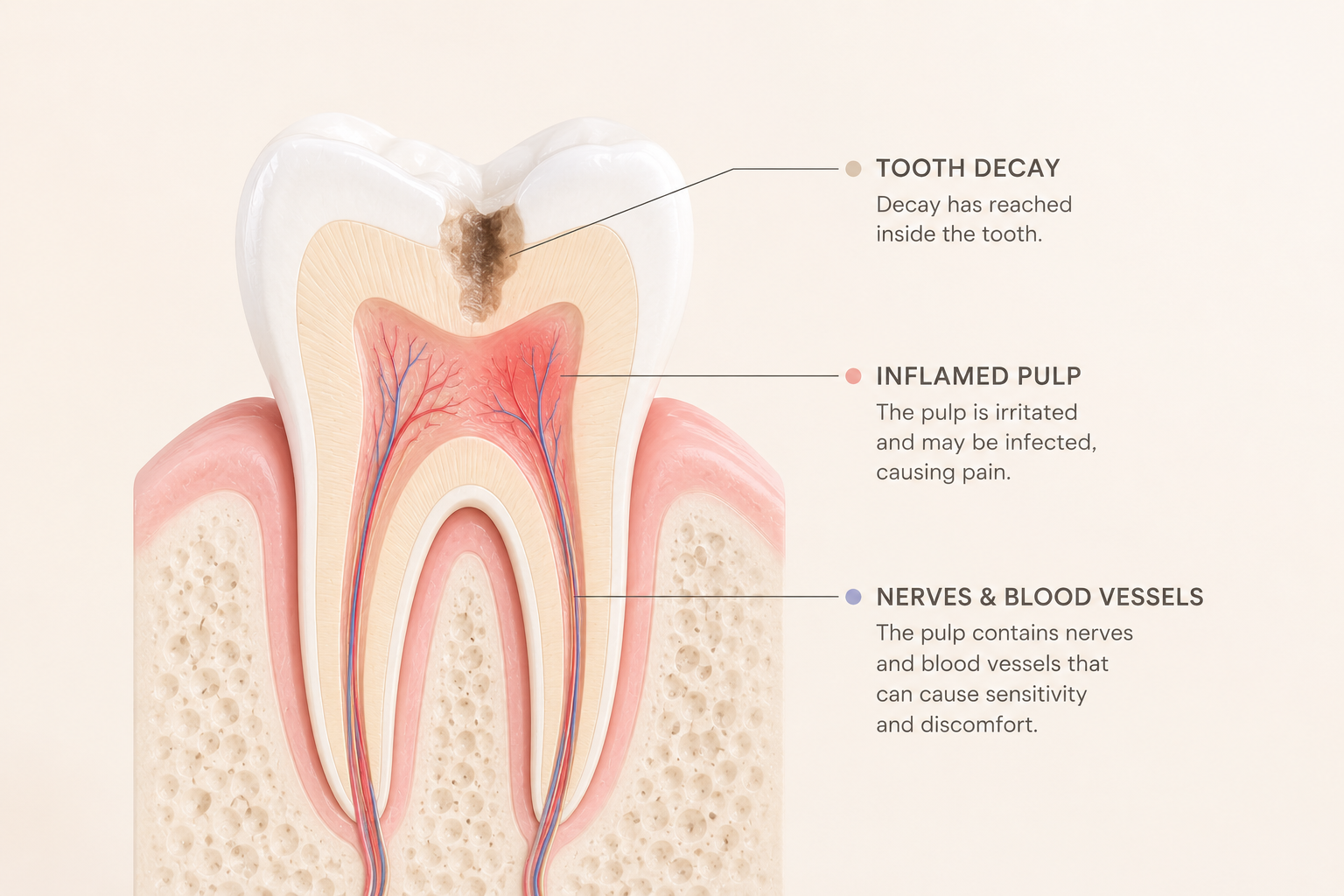
Tooth decay reaching the nerve of the tooth (pulp), causing a severe toothache.
What Is Root Canal Treatment?
Inside every tooth is a soft tissue known as the pulp, which contains nerves and blood vessels. When deep decay, cracks or trauma allow bacteria to reach the pulp, the tooth may become inflamed or infected.
This commonly presents as:
persistent, severe toothache
pain when biting
extreme sensitivity to hot or cold
gum swelling
difficulty sleeping due to dental pain
Root canal treatment removes the infected pulp, disinfects the canals within the tooth and seals the space to help prevent reinfection.
The aim is to preserve the natural tooth whenever possible.
When Is Root Canal Treatment Needed?
Root canal treatment may be recommended when the nerve of the tooth is irreversibly inflamed or infected.
Common causes include:
deep tooth decay
cracked or fractured teeth
repeated dental treatment on the same tooth
dental trauma or injury
severe wear exposing the inner tooth structure
Painkillers may temporarily reduce symptoms but do not treat the underlying infection.
Without treatment, the infection may worsen and eventually lead to:
swelling
abscess formation
spread of infection
tooth loss
Is Root Canal Treatment Painful?
One of the most common concerns patients have is whether root canal treatment is painful. In reality, modern root canal treatment is usually performed under local anaesthesia and is generally no more uncomfortable than placing a dental filling.
Many patients often feel immediate pain relief after the procedure is completed. Some soreness or tenderness after treatment is normal and usually improves over the following few days.
What Happens During Root Canal Treatment?
Root canal treatment is usually completed over 2 to 3 visits, depending on the tooth involved and the severity of the infection.
First Visit: Cleaning the Infection
During the first appointment:
infected tissue and decay are removed
the canals inside the tooth are cleaned and disinfected
medication may be placed within the tooth to help control infection
a temporary filling is placed between visits
Some mild soreness or tenderness after treatment is normal and usually settles within a few days. Patients are generally advised to avoid biting heavily on the tooth until treatment is completed.
Second Visit: Filling & Restoring the Tooth
Once the infection has improved, the tooth is sealed up to help prevent reinfection.
The tooth is then restored with either:
a filling
ora crown, depending on how much natural tooth structure remains.
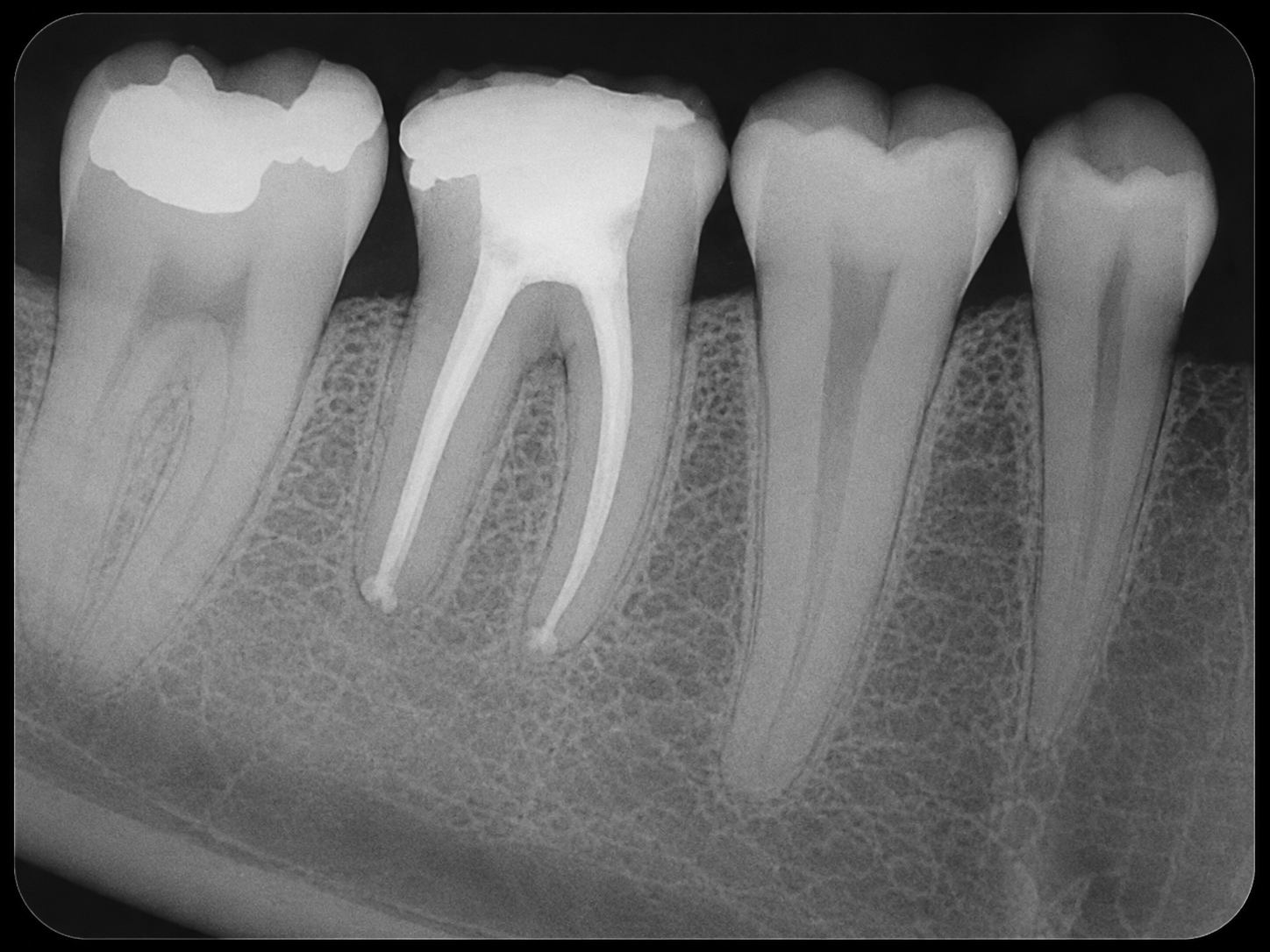
Image of a lower first molar with root canal treatment done. The canals are sealed (white area) to prevent re-infection.
Why Is a Crown Sometimes Needed After Root Canal Treatment?
Teeth that have undergone root canal treatment may become more brittle over time, especially if a large amount of tooth structure has already been lost due to decay or fractures.
A dental crown helps to:
strengthen the tooth
reduce the risk of cracking
restore long-term function
Crowns are more commonly recommended for back teeth, which experience heavier biting forces.
What Are the Alternatives to Root Canal Treatment?
The main alternative to root canal treatment is extraction of the tooth.
After extraction, replacement options may include:
Whenever possible, preserving a natural tooth is generally preferred, as natural teeth help maintain normal chewing function and surrounding bone support.
However, not all teeth are suitable for root canal treatment. In some situations, where the tooth is too severely damaged, cracked or structurally compromised, extraction and replacement with a dental implant may provide a more predictable long-term outcome.
A proper clinical examination and dental X-rays are important to help determine the most appropriate treatment option for each individual case.
Can Root Canal Treatment Only Be Performed by Specialists?
Root canal treatment may be performed by both general dentists and endodontists (root canal specialists).
More complex cases may sometimes be referred to an endodontist, particularly when:
canals are unusually curved or narrow
previous root canal treatment has failed
infection is severe
specialised equipment such as endodontic microscopes are required
Referral decisions are usually made on a case-by-case basis.
Is Root Canal Treatment Safe?
There are many misconceptions online regarding root canal treatment. Current scientific evidence does not support claims that root canal treatment causes other diseases elsewhere in the body. Root canal treatment is a well-established procedure performed worldwide to treat dental infection and preserve natural teeth.
Long-term studies have shown high success and survival rates for properly treated root canal teeth when maintained appropriately.
How Much Does Root Canal Treatment Cost in Singapore?
The cost of root canal treatment varies depending on:
which tooth is involved
the number of roots and canals
treatment complexity
whether specialist care is required
In general, front teeth are usually simpler to treat, while molars are more complex due to multiple canals and therefore tend to cost more. Based on recent fee benchmarks published by Singapore’s Ministry of Health, average private dental fees are approximately:
Anterior (Front Tooth): $400 to $775
Pre-molar: $500 to $900
Molar: $872 to $1,400
Additional costs may include:
X-rays
medication
fillings
crowns, if required
While root canal treatment may seem like a significant investment, preserving a natural tooth may help avoid more extensive replacement treatment in the future.
Common Concerns About Root Canal Treatment
Can a Root Canal Fail?
Although root canal treatment has a high success rate, reinfection may occasionally occur due to:
complex canal anatomy
severe cracks and fractures in the tooth
delayed crown placement
leakage from old restorations
In some situations, retreatment or additional procedures may be recommended.
How Long Does a Root Canal Treated Tooth Last?
With good oral hygiene, regular dental care and appropriate restoration, many root canal treated teeth may function for many years. Long-term outcomes depend on the condition of the tooth, biting force, restoration (crown) quality, and overall oral health.
Recovery After Root Canal Treatment
Most patients are able to return to work or normal daily activities shortly after treatment. Some mild tenderness or sensitivity may occur for a few days, particularly when biting. This usually improves gradually as the surrounding tissues heal.
Considering Root Canal Treatment?
Root canal treatment is intended to relieve pain, treat infection and preserve natural teeth whenever possible.
If you are experiencing persistent tooth pain, swelling or sensitivity, early assessment may help prevent further complications and improve treatment outcomes.
Please note that this article is intended for general educational purposes and is based on clinical experience and current scientific evidence.
Sources:
Ng YL, Mann V, Gulabivala K. Tooth survival following non-surgical root canal treatment: a systematic review of the literature. Int Endod J 2010;43:171-189.
Stavropoulou AF, Koidis PT. A systematic review of single crowns on endodontically treated teeth. J Dent 2007;35:761-767.
Dammaschke T, Steven D, Kaup M, Ott KH. Long-term survival of root-canal-treated teeth: a retrospective study over 10 years. J Endod 2003;29:638-643.
https://www.moh.gov.sg/managing-expenses/bills-and-fee-benchmarks/guide-to-dental-treatment-costs/
